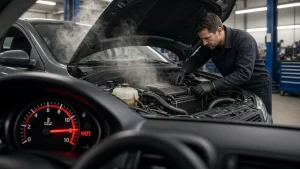
 The temperature gauge is a warning, not a suggestion.
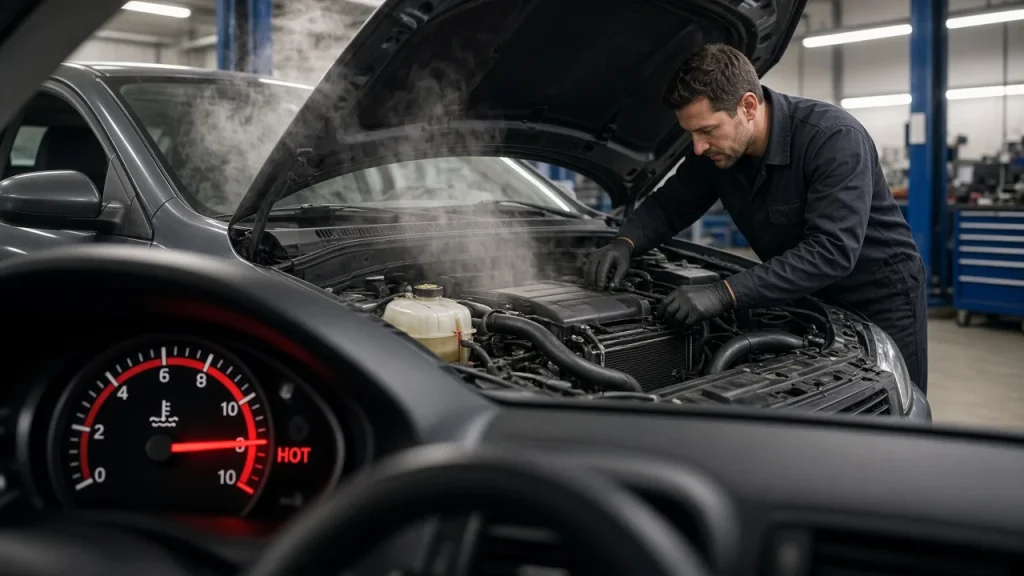
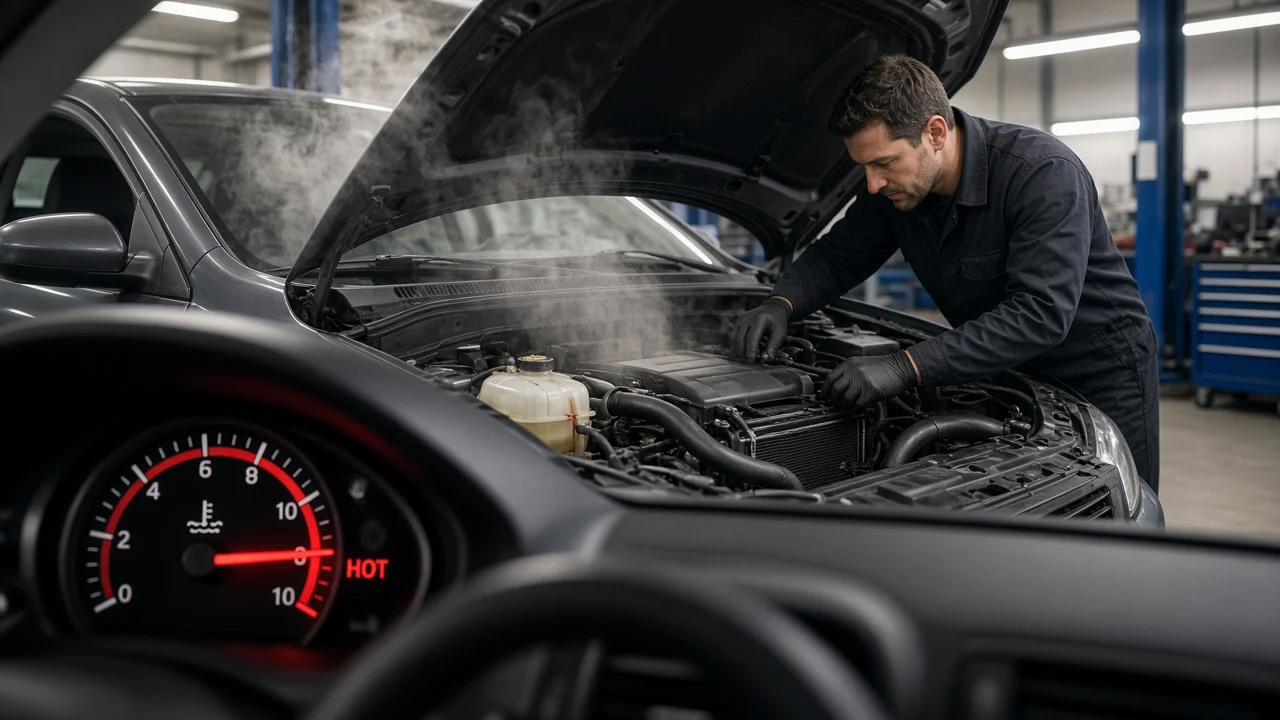
Drivers on St. Georges Avenue watch it creep after a slow crawl through Woodbridge lights, a short hop to Clark, or a summer idle in an Edison lot. Steam under the hood is louder. A sweet coolant smell after parking is quieter. All three mean heat is winning.
This guide covers the first minutes when the needle climbs, how the cooling system actually moves heat, the causes Colonia drivers feel most often, when a top-off is only a bridge to the shop, and how to decide drive versus tow. You also get plain notes on New Jersey heat and short trips, plus what a real bay diagnosis looks like. For booked cooling work, start with engine cooling system service in Colonia.
No scare script. Clear steps so a rising gauge does not turn into a cooked engine on Route 27.
American Auto Repair Center is at 1131 St. Georges Ave., Colonia, NJ 07067. Call (732) 702-3999 when you want findings before parts.
First 60 seconds when the temperature gauge climbs
Find a safe place to pull over. Hazard lights help other drivers see you. Shut the engine off once you are stopped and clear of traffic.
Turn the A/C off. Cabin cooling loads the system. Some drivers open the heater to dump heat into the cabin as a temporary trick while rolling to a safer spot. That only helps if the engine is still running and coolant is circulating. Once you stop, engine off is the priority.
Do not open the radiator cap or pressurized reservoir while the system is hot. Steam and scalding coolant escape under pressure. Wait until the engine is fully cool before any reservoir look.
Heavy steam, coolant dumping on the pavement, or a gauge that climbs again right after a restart means stop guessing. Arrange a tow or call (732) 702-3999 rather than pushing it home through Avenel or Rahway. A short limp that “almost made it” is how head and gasket damage starts.
Write down what you saw: needle position, steam or no steam, puddle color, and whether the fan sounded like it ran at idle. That note speeds the inspection when you arrive.
How the cooling system actually works (plain English)
Coolant absorbs heat from the engine. Heat then leaves through the radiator into the air. Circulation depends on the water pump. Flow is metered by the thermostat so the engine warms up, then stays in range. Electric or clutch fans add airflow when speed is low or you are stuck in traffic.
Overheating means circulation failed, heat rejection failed, or both. Random engine curses are not the story. Stuck thermostats block flow. Weak pumps move too little fluid. Clogged or leaking radiators cannot shed heat. Dead fans leave you fine on the highway and hot at a light.
Swapping one part without a test often wastes money for that reason. Heat is the symptom. Flow or rejection failure is the cause.
Correct coolant type matters too. IAT, OAT, and HOAT formulas are not the same chemistry. Mixing “universal” bottles can dilute the additives your system needs. Distilled water belongs in the mix when the concentrate calls for it. Tap minerals leave deposits.
Common causes Colonia drivers actually feel
Ranked by how they show up in real life, not by scare factor:
Low coolant or an external leak. Puddles under the front of the car, a sweet smell after parking, crusty residue on hoses, or a reservoir that keeps needing a top-off. Green, orange, pink, or yellow fluid on the driveway is a booking cue. Repeated top-offs without finding the leak only delay the real repair.
Stuck thermostat. The gauge climbs fast, sometimes soon after startup. The upper radiator hose may stay cool longer than it should if the thermostat never opens. Rapid climb with little warm-up at the hose is a classic clue, not a reason to buy parts before a check.
Radiator problems. Clogs, fin damage, poor airflow from debris, or tank and seal leaks cut heat rejection. Highway driving may feel almost normal while idle heat stacks. Bent fins and blocked cores show up after road debris or age.
Water pump wear. Weep-hole drips, a chirp or grind from the pump area, or weak circulation that leaves the engine hot even when the radiator looks fine. On many engines the pump is timing-belt driven. Interval and inspection decide whether the belt and pump travel together. See timing belt services in Colonia when that package fits the evidence.
Cooling fan, relay, or sensor faults. The car runs cool on the highway and climbs in Colonia stop-and-go or after parking with the A/C on. Listen for the fan at operating temperature. Silence when it should roar is useful information for the bay.
After a severe overheat. Combustion gases can leak into the coolant on some engines. That path needs a combustion-leak check, not a forum diagnosis that “it must be the head gasket.” Inspect to confirm. Do not assume the worst from one hot episode alone.
Rough idle plus a rising gauge, or a check engine light after heat, belongs in the same story you tell the advisor. Overlap is common. Guessing which system first is how people buy the wrong part twice.
DIY top-off vs a real cooling diagnosis
Topping the reservoir can get you to the shop once if the engine is fully cool and you use the correct fluid. That pour does not find the leak, free a stuck thermostat, or prove the fan works.
Leave hot caps alone. Weeks of drive-and-top-off only hide a growing problem. “Stop leak bottles can clog passages and heaters. Skip them as a default fix.
A real diagnosis at American Auto Repair Center follows the live cooling process:
- Cold visual: Inspect dried coolant residue around hoses, the radiator, and the water pump while the engine is cold.
- Pressure test: Raise the system to radiator-cap pressure and watch where pressure drops or fluid escapes.
- Combustion leak check when indicated: Use a combustion-leak tester at the radiator opening if exhaust-into-coolant is suspected.
- Thermostat and fan verification: Watch the upper hose as the engine warms. Confirm fans turn on at the right temperature.
- Quote before parts: Explain the root cause in plain English, then price the repair you approve.
That Inspect → Quote Repair → Confirm rhythm matches engine cooling system service in Colonia. Bring photos of puddles and notes on when the gauge climbs. Those details shrink the guesswork.
If the car barely runs or steam is active, skip another parts-store aisle run. Call (732) 702-3999 and describe what you see.
Is it safe to drive to the shop in Colonia?
Use this as a practical filter, not a substitute for a tow decision.
A careful short daylight trip may be okay when: the climb was brief, the gauge dropped after a full cool-down, there is no active steam, coolant is not dumping, and you can watch the needle with A/C off on a short local route to 1131 St. Georges Ave.
Do not continue when: the needle returns to the red, steam returns, power fades, the heater blows cold while the engine is hot (possible loss of circulation), or the gauge climbs again right after restart. Arrange a tow. Protect the engine over the calendar.
Call first when: you are unsure, the car is your only ride, or you already limped it once and heat came back faster. A short phone description often tells you whether a careful drive fits or a tow is smarter.
Shop hours are daytime Monday through Saturday. Monday to Friday 8:30 AM to 6:00 PM. Saturday 8:30 AM to 4:00 PM. Sunday closed. Plan arrival inside published hours.
Drivers heading in from Woodbridge, Clark, Edison, Avenel, or Rahway should treat a second red-zone event the same day as a stop, not a challenge.
NJ heat, short trips, and why idle heat sneaks up
Summer heat and stop-and-go stress cooling systems. Short trips around Colonia and Woodbridge may never show a highway-only fan problem until you idle with the A/C on. Winter cold starts can hide a weak thermostat until the next warm week.
After any overheat event, get a real inspection before a long Parkway run or an inspection appointment window. A temp warning is not something to “see if it settles” before a readiness check. Soft rule: do not ignore the gauge when paperwork or a highway trip is next on the calendar.
Duty cycle matters. Rideshare curb pulls, trailer weekends, and repeated idle with cabin A/C all raise under-hood heat. Mention how you actually drive so the road test matches real life.
Preventive hose, belt, and coolant checks belong on a maintenance plan before the gauge lectures you. Tie that longer view to preventive maintenance in Colonia when you are booking ahead rather than reacting mid-steam.
What happens at American Auto Repair Center
You pull into 1131 St. Georges Ave., Colonia, NJ 07067. Call (732) 702-3999 to describe symptoms before you arrive if that helps.
In the bay, the tech starts cold: residue trails, hose condition, radiator tanks, water pump area, and cap condition. A pressure test then loads the system to cap pressure. Dropping pressure points to where fluid wants out.
When exhaust-into-coolant is on the table, a combustion-leak tester goes on the radiator opening. Color change is evidence, not a vibes call. Thermostat behavior shows up as the upper hose warms with the engine. Fans get verified at operating temperature so idle heat in traffic is not a mystery.
Coolant refill uses the correct type for your vehicle. IAT, OAT, and HOAT are not swap-at-will colors. Wrong mix hurts seals and inhibitors over time. Freeze-point and condition checks support that choice.
You hear findings in plain English. Then you see an upfront quote. Parts go on after approval. After the repair, the system is rechecked so the gauge stays honest on your commute through Woodbridge, Clark, Edison, Avenel, or Rahway.
Ask what must be fixed now for heat control, and what can wait while the car is already open. That split keeps the visit honest and the bill predictable.
For a wider map of what to book and when, use the Colonia NJ auto repair services guide.
Related problems that share the same bay
Heat rarely travels alone on the dash.
Check engine light after overheat or with sensor codes. Temp, fan, and misfire-related codes often show up after a hot episode. Pair cooling work with check engine light diagnostics in Colonia when the amber icon joins the story. The deeper solid-vs-flashing guide lives at check engine light on in Colonia.
Warm cabin air versus engine temperature confusion. Weak A/C comfort is not the same as a climbing temp gauge, but heater-core and blend issues can confuse the seat-of-pants read. Sort cabin symptoms through auto AC repair in Colonia and the walkthrough on car AC blowing warm air in Colonia.
Timing-belt-driven water pump interval. Many interference engines package the pump with the belt. When mileage and inspection line up, review timing belt services and the interval deep dive on timing belt replacement in Colonia. Honest shops only bridge to that job when the evidence fits.
Skipped coolant and hose care. Cracked hoses and aged fluid show up as “sudden” overheats that were building for months. Fold checks into preventive maintenance in Colonia before the next heat wave.
Tell the advisor every light, smell, and puddle you noticed. One visit can sort overlapping paths when the story is complete.
Frequently asked questions
Why is my car overheating in Colonia? Most often the cause is low coolant or a leak, a stuck thermostat, radiator airflow or restriction, a weak water pump, or a cooling fan that fails at idle. A pressure-tested diagnosis finds which path fits. Guessing parts from a forum post usually costs twice.
What should I do if the temperature gauge hits the red? Pull over safely, shut the engine off, and wait for a full cool-down. Never open a hot radiator cap. Call (732) 702-3999 or arrange a tow if steam or leaks continue.
Can I just add water or coolant and keep driving? A cool-engine top-off may get you to the shop once. It does not fix the cause. Avoid repeated drive and top off” cycles that mask a growing leak or stuck thermostat.
How do you diagnose a cooling problem? Cold visual inspection, system pressure test, thermostat and fan checks, and combustion-leak testing when indicated. Then you get a quote before parts. That is the Inspect → Quote → Repair → Confirm path on the cooling service page.
Is a water pump the same job as a radiator flush? No. A flush refreshes fluid condition. Pump, radiator, and thermostat repairs fix mechanical failures. Owner’s manual interval plus inspection decide what your car needs.
When should I get a coolant flush? Follow the owner’s manual. Multi-year and mileage intervals vary by coolant type (IAT, OAT, HOAT). Bring the vehicle in for the correct formula. “Universal” mixes are not always safe for every system.
Get the cooling system checked before heat cooks the engine
A climbing gauge is a message. Safe pull-over steps protect you. Causes point to circulation or heat rejection. Diagnosis finds the leak, thermostat, radiator, pump, or fan fault. Repair plus confirmation keeps the needle where it belongs.
Book engine cooling system service in Colonia or call (732) 702-3999. American Auto Repair Center at 1131 St. Georges Ave., Colonia, NJ 07067 will pressure-test the system, explain the root cause, quote upfront, and confirm the temperature stays in range.