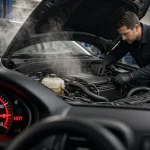
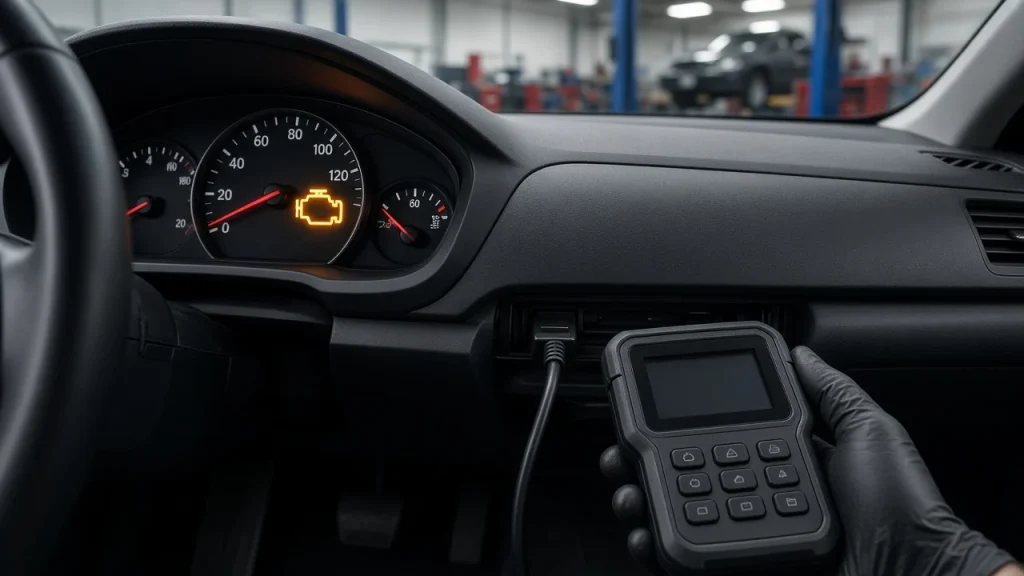
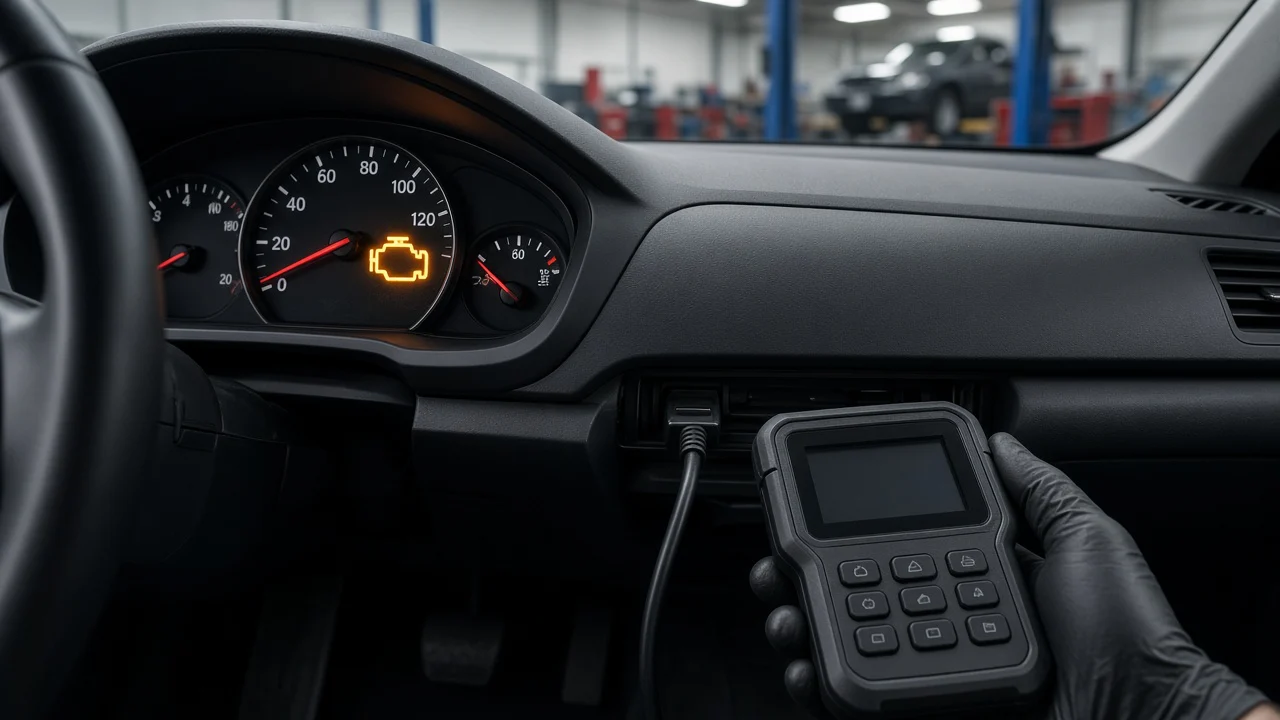
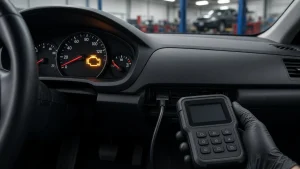
That amber icon on the dash is not random. It is a stored message from the engine computer about fuel, ignition, or emissions.
Drivers on St. Georges Avenue see it after a fill-up, a rough idle at a light, or a week of soft power on the way through Woodbridge. The light does not invent a problem. It flags one the car already noticed.
This guide sorts solid vs flashing, what OBD-II actually watches, the causes Colonia drivers hit most often, when a DIY stick is enough versus a shop scan, and how to decide drive vs stop. You also get New Jersey inspection readiness notes and what a real bay visit looks like. For a full diagnostic visit, start with check engine light diagnostics in Colonia.
No fear lecture. Just a clear next step so you do not guess with parts while the catalyst quietly cooks.
American Auto Repair Center is at 1131 St. Georges Ave., Colonia, NJ 07067. Call (732) 702-3999 when you want findings before parts.
Solid vs flashing: how urgent is that light right now?
Solid check engine light. The computer logged a fault that usually points to emissions, fuel trim, sensors, or a misfire that is not active every second. The car may still drive. That does not mean wait until next year. Book soon so a small leak or tired sensor does not grow into a catalytic converter bill.
Flashing check engine light. Treat this as active misfire risk. Unburned fuel can dump into the exhaust and overheat the catalyst. Ease off the throttle. Get to a safe spot. Avoid highway load and long climbs. Call for advice or a tow rather than “pushing through” to finish errands in Clark or Edison.
A quick rule of thumb: solid plus normal drivability means schedule diagnostics. Flashing, or solid plus shaking, smell, or rising temp, means stop stressing the engine now.
Write down when the light started, whether it flashes, and any new sounds or smells. That note speeds the scan when you arrive.
Both patterns belong in the same booking funnel. The difference is how fast you move. Solid light drivers can usually schedule within a few days. Flashing light drivers should treat the next safe stop as the start of the repair plan.
What OBD-II really watches (plain English, not jargon)
Modern cars use OBD-II to monitor systems that affect emissions and engine health. Sensors report air, fuel, spark, and exhaust behavior. When a reading falls outside expected range, the computer stores a diagnostic trouble code and may turn the light on.
A code names a system or circuit, not always a failed part. An oxygen sensor code can mean a bad sensor, a wiring fault, an exhaust leak, or a fuel problem upstream. That is why “the stick said P0420 so replace the cat” often wastes money.
Live data matters. Freeze-frame snapshots show engine speed, load, and temperature when the fault set. A professional scanner reads those values while the engine runs. A $20 plug-in reader usually does not.
If someone already cleared codes with a parts-store tool, say so at booking. Clearing erases clues. The fault may return after a few drive cycles, and the shop then starts with less history.
Common causes Colonia drivers actually see
Ranked by how often they show up in real life, not by scare factor:
Loose or damaged gas cap. After a fill-up on Route 27 or at a local station, the EVAP system can detect a leak if the cap is loose, cracked, or missing. The light may come on after a day or two. Tighten it until it clicks. If the light stays on after several trips, still get a scan. The cap is only one EVAP path.
Oxygen (O₂) sensor issues. These sensors help the computer balance fuel. A slow or failed sensor can hurt mileage, raise emissions, and set codes. Replacing the sensor only helps when diagnosis points there. Guessing from a code number alone is a common DIY miss.
EVAP leaks beyond the cap. Hoses, purge valves, and charcoal canisters can leak vapor. You may notice a fuel smell near the rear of the car or after parking. EVAP faults rarely leave you stranded. They do fail inspection readiness and deserve a proper smoke or pressure test when the scan points there.
Spark plugs, coils, and misfire. A stumble at idle, a shake under acceleration, or a flashing light often traces to ignition. Worn plugs, a weak coil, or a fouled plug can dump fuel into the exhaust. Fixing misfire early protects the catalytic converter. Waiting turns a plug job into catalyst work.
Catalytic converter codes (often secondary). Efficiency codes can follow long-running misfires, rich fuel conditions, or age. The converter is expensive. Confirm root cause before you approve replacement. Many “cat” codes clear after the real upstream fault is fixed and the system is retested.
MAF sensor and vacuum leaks. Dirty mass airflow sensors and cracked vacuum lines upset the air-fuel mix. Rough idle, surging, or poor MPG show up first in stop-and-go around Colonia and Avenel. Cleaning or replacing the wrong part without checking for leaks sends you back to the bay.
Rough idle and falling fuel economy are early booking cues. Do not wait for a no-start to take the light seriously.
Season and trip pattern matter too. Short hops around Colonia never fully warm some monitors. Highway pulls to Edison can set misfire under load that idle never showed. Tell the shop both patterns so the road test matches how you actually drive.
DIY code reader vs real check engine light diagnostics
A cheap reader can show a starting code. That is useful. It is not a diagnosis.
Generic sticks often miss manufacturer-specific codes, bidirectional tests, and live graphing. They cannot prove whether the sensor failed or the wiring did. They cannot run many EVAP monitors or relative compression checks. Swapping parts from a code list turns into parts roulette.
Professional check engine light diagnostics in Colonia follow a clear path that matches the service bay process:
- Scan – Pull codes with a professional scanner and capture live engine data under load when needed.
- Quote – Explain the root cause in plain English and give an upfront quote before parts go on.
- Repair – Replace sensors, wiring, ignition parts, or related components only after you approve.
- Confirm – Clear codes, retest, and make sure the light stays off through a verification drive when appropriate.
Bring any codes you already wrote down. Mention recent gas fills, oil service, or battery disconnects. Those details shrink the guesswork.
If the car barely runs or the light flashes on the Parkway approach, skip another trip to the parts store. Call (732) 702-3999 and describe what you feel.
Drive or stop: a simple decision tree for Colonia roads
Use this as a practical filter, not a substitute for a scan.
Short trips are usually okay when: the light is solid, the engine idles smoothly, power feels normal, no fuel or burning smell, and the temperature gauge stays in range. Book diagnostics soon. Do not clear the light and hope it never returns before inspection season.
Stop and get help when: the light flashes; the engine shakes hard; you smell raw fuel or hot catalyst; the temperature gauge climbs; oil pressure or other critical warnings join the CEL; or power fades fast on hills through Rahway or Edison.
Call before you cross town when: you are unsure, the car is your only ride, or you already limped it once and the symptom got worse. A short phone description often tells you whether to drive carefully to 1131 St. Georges Ave. or arrange a safer move.
Flashing plus highway speeds is a bad mix. Reduce load. Exit when you can. Protect the catalytic converter by not forcing the engine to keep misfiring at high RPM.
NJ inspection and emissions readiness (what drivers should know)
An illuminated check engine light commonly causes an emissions inspection fail. Plan the repair before your appointment window, not the morning of the test.
Clearing codes with a cheap tool can turn the light off for a short stretch. Monitors then need completed drive cycles to show “ready.” If you show up with incomplete monitors or the light returns on the way to the lane, you still risk a fail. A real scan after repair confirms the fault is gone and readiness looks healthy.
American Auto Repair Center focuses on finding and fixing the cause, then confirming the light stays off. That is the practical path to inspection readiness. No shop can promise a pass without diagnosing your specific codes and vehicle condition. Skipping diagnosis to “just pass” usually costs a second trip.
If inspection season is close and the light just came on, book sooner rather than later. Drive-cycle completion takes time after a repair.
Keep receipts and the repair order. If a retest is needed, having the work documented saves arguments at the lane and helps the next shop (or the same bay) see what was already done.
What happens in the bay at American Auto Repair Center
You pull into 1131 St. Georges Ave., Colonia, NJ 07067. Hours: Mon-Fri 8:30 AM-6:00 PM, Sat 8:30 AM-4:00 PM, Sunday closed. Call (732) 702-3999 to describe symptoms before you arrive if that helps.
In the bay, the tech connects a professional scanner, reviews stored and pending codes, and checks live data while the engine runs. When needed, smoke tests, fuel trim review, ignition checks, or relative tests narrow the cause. You get findings in plain English. Then you see an upfront quote.
Parts go on only after approval. After the repair, codes are cleared and the system is rechecked so the light does not come right back on your commute through Woodbridge, Clark, Edison, Avenel, or Rahway.
Upfront pricing removes the blank-check fear. You decide what is required now versus what can wait. That Scan → Quote → Repair → Confirm rhythm is the same process on the engine light diagnostics service page.
Ask what must be fixed for the light and for inspection readiness, and what is optional while the car is already open. That split keeps the visit honest and the bill predictable.
For a wider map of what to book and when, use the Colonia NJ auto repair services guide.
Related dash problems that share the same warning cluster
The check engine light is one icon. Other dash issues often travel with it.
Overheating or climbing temp with a CEL. Do not ignore the gauge. Pair diagnostics with an engine cooling system check when heat and codes show up together. A weak fan, low coolant, or thermostat fault can spoil both comfort and engine health.
Rough running after overdue oil or skipped services. Dirty oil and neglected filters do not “cause every code,” but neglected engines throw more ignition and fuel-trim faults. An auto oil change in Colonia and a sensible preventive maintenance plan keep baselines clean so new codes mean something real.
Cam, crank, or timing-related codes. On interference engines, timing wear is not a wait-and-see item. When codes and symptoms point that way, review timing belt services and the deeper interval guide on timing belt replacement in Colonia. Honest shops only bridge to timing work when the evidence fits.
Tell the advisor every light and symptom you saw, not only the amber engine icon. One visit can sort overlapping paths when the story is complete.
Frequently asked questions
What does a solid check engine light mean? A solid light usually means a non-emergency fault stored in the computer. Common paths include a gas cap or EVAP leak, oxygen sensor issues, or other emissions-related problems. Drive carefully if the car feels normal, and book diagnostics soon so the fault does not grow.
What does a flashing check engine light mean? Flashing typically signals an active misfire that can damage the catalytic converter. Reduce engine load, pull over safely, and arrange service or a tow. Continuing under hard acceleration is the expensive choice.
Can I drive with the check engine light on in Colonia? If the light is solid and the car drives normally, short local trips are often fine while you schedule a scan. If the light flashes, or you feel rough running, smell fuel, or see rising temperature, do not keep driving across town. Call (732) 702-3999 for guidance.
Will a cheap code reader fix it? No. A reader shows a starting code. It does not prove which part failed or whether wiring, vacuum, or fuel delivery is the real issue. Professional diagnostics use live data and tests that go past the code label.
Can the light turn off by itself? Sometimes the light goes out after a few drive cycles if a condition was temporary. The fault can still be stored, and the problem can return or worsen. Get it scanned even if the icon disappears.
Will the check engine light fail NJ inspection? An illuminated malfunction indicator lamp commonly causes an emissions fail. Diagnose and repair before your inspection window. Clearing codes without fixing the cause is a common reason drivers fail after a short “light off” stretch.
Get the light read before it costs you a catalyst
The check engine light is a message. Solid vs flashing tells you how fast to act. Codes point to systems. Diagnosis finds the cause. Repair plus confirmation keeps the icon dark and helps inspection readiness.
Book check engine light diagnostics in Colonia or call (732) 702-3999. American Auto Repair Center at 1131 St. Georges Ave., Colonia, NJ 07067 will scan the car, explain the root cause, quote upfront, and confirm the light stays off.