Sunset now arrives before most people leave work. St. Georges Avenue and the Garden State Parkway look darker than last month. You wipe the headlights, and the road still looks dim.
Quick answer: Headlights that look dim at night usually come from cloudy or yellowed lenses, aging bulbs, poor aim, or a wiring or charging problem. Wipe the lenses and compare both sides. If the plastic still looks hazy, one side is weaker, or the lights fade at idle, get them checked before you drive at night.
Key takeaways
- Cloudy plastic lenses can cut light sharply. AAA measured badly worn low beams at 22 percent of a new headlight’s output.
- One side dimmer than the other often points to an old bulb, a bad connection, or moisture in that housing.
- Lights that flicker or fade together at idle suggest a voltage problem, not a lens problem.
Already seeing a weak side? Call American Auto Repair Center at (732) 702-3999 before your next night drive.
Why Do Dim Headlights Show Up More in Late November?
Shorter days put more of your commute in the dark. Thanksgiving week adds longer trips after sunset, often through rain and road spray. A slow loss of light you barely noticed in summer is obvious now.
Road salt and film also coat the lenses once winter driving starts in New Jersey. A wipe clears that outer layer. If the road still looks dark afterward, the cause sits deeper. For wipers, washer fluid, and the rest of a pre-winter walk-around, see our winter car prep checklist for Colonia.
What Makes Headlights Look Dim at Night?
Most dim headlights come down to four causes. Each one looks different from the driver’s seat.
Cloudy or Yellow Headlights
Most modern headlight lenses are plastic. Sunlight breaks down their protective coating, and the lens slowly turns yellow or chalky. According to AAA, this can begin within three to five years, depending on how the car is used.
The loss is bigger than most drivers expect. In AAA’s 2018 headlight study, deteriorated low beams produced just 22 percent of the light of new headlights. Restoration brought output back to about 70 percent but created more glare than DOT criteria allow. Replacement with original equipment parts restored the most light.
Aging or Mismatched Bulbs
Bulbs fade before they fail. As a filament ages, deposits build up inside the bulb and the beam weakens. When one side looks clearly dimmer, the two bulbs may differ in age or type.
Halogen, HID, and LED headlights use different hardware, so check the owner’s manual for the right replacement.
Headlights Aimed Too Low or Too High
Bright bulbs can still leave the lane dark. Beams pointed too low light only the pavement near the bumper. Aim set too high does the opposite and throws glare at oncoming drivers. A bump or a recent bulb change can shift it.
Wiring, Grounds, or a Weak Charging System
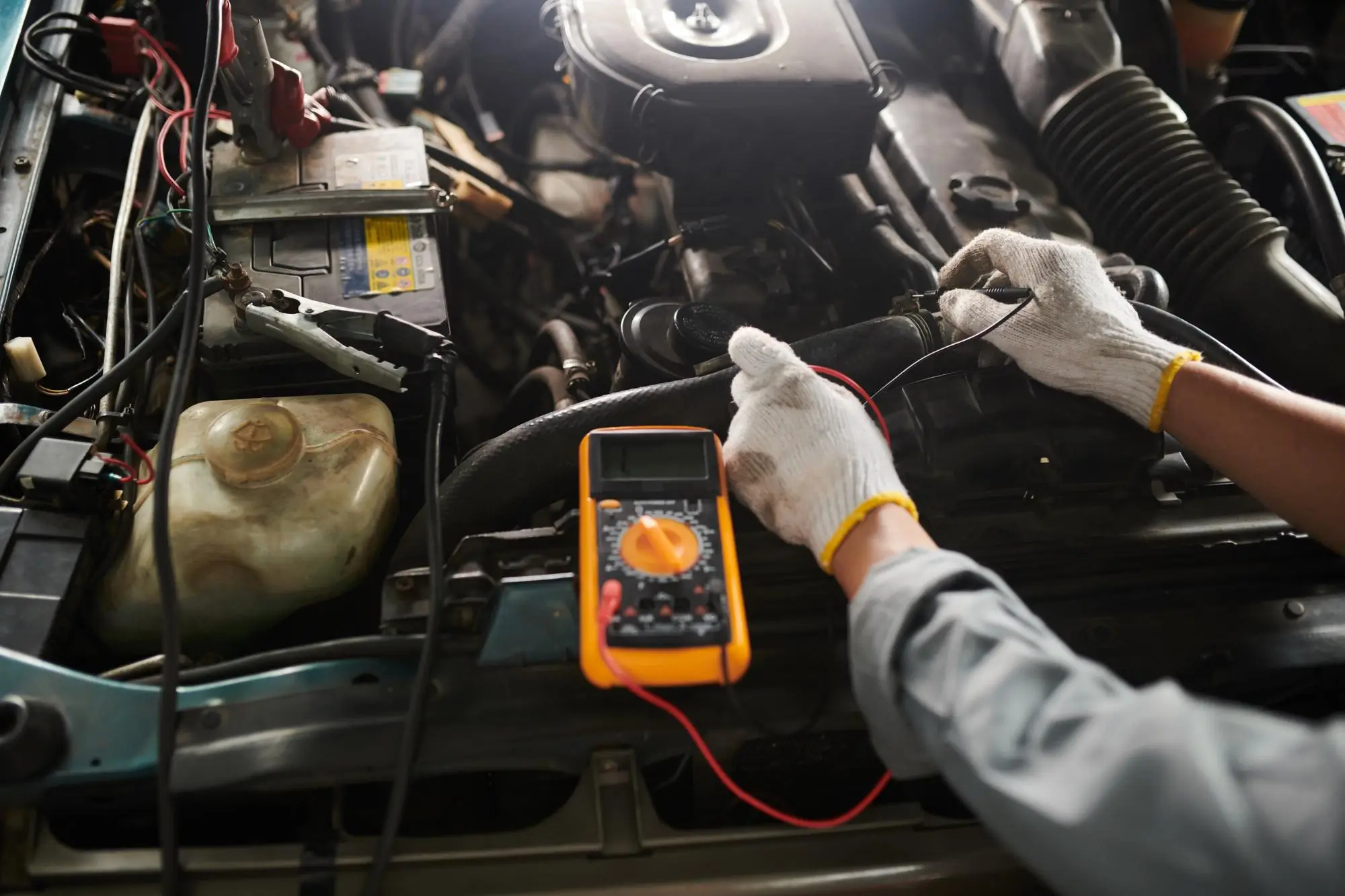
Both lights dimming together, flickering, or fading at idle tells a different story. Voltage is the likely suspect, not the lens.
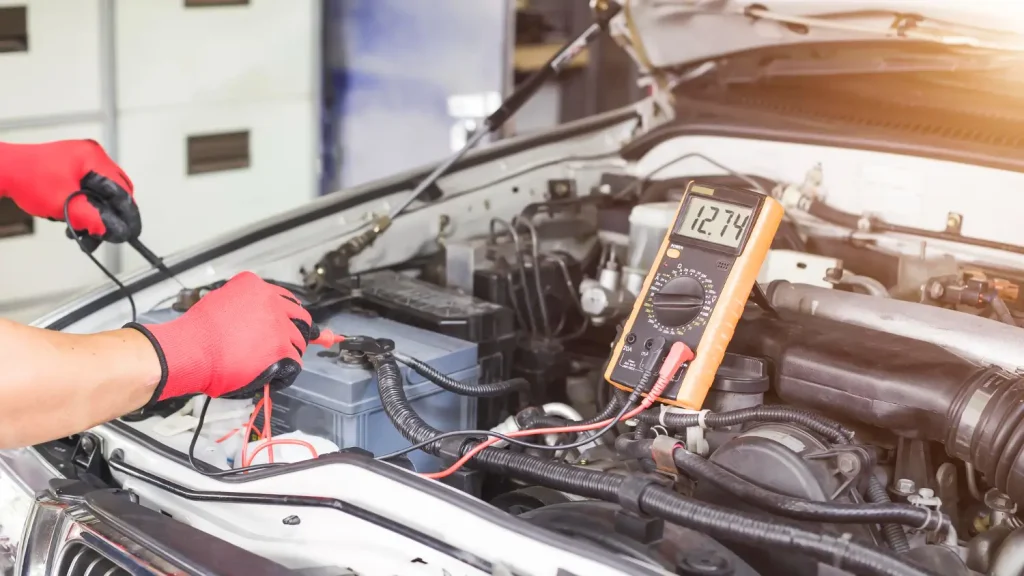
Resistance in the wiring, a corroded ground, or a charging system that underperforms can all starve the lights. A visual check can’t find these faults. Testing can, which is why electrical diagnostics in Colonia is the right next step when you see this.
How Can You Check Your Headlights in the Driveway?
A five-minute check after dark tells you a lot. All you need is a wall or garage door and a helper.
- Park facing the wall and turn on the low beams. Compare the two pools of light for brightness, color, and height.
- Wipe both lenses with a damp cloth. If the beams improve, outside grime was the problem.
- Look closely at each lens. Yellowing, chalkiness, or droplets inside mean more than dirt.
- Switch to high beams while your helper watches. Both sides should work in both modes.
- Let the engine idle and watch the light on the wall. Fading at idle hints at a voltage or charging issue.
Did a wipe fix everything? Then you’re set. If the haze stays, one side is weak, moisture is inside, or the lights fade at idle, stop tinkering. A shop check is the next step. Keeping up with preventive maintenance in Colonia also helps catch small problems before they leave you in the dark.
When Is It Not Safe to Wait?
Some headlight problems should be fixed before your next drive after dark. Get the car checked first if you notice any of these:
- One headlight out, on low or high beam
- Lights that flicker, cut out, or fade while you drive
- Beams too weak to show the edge of a dark highway
- Water or fog inside a headlight housing
New Jersey requires most vehicles to carry at least two approved headlamps, mounted at the same level with an equal number on each side (N.J.S.A. 39:3-49). A car with one lamp out does not meet that standard.
What Can a Check at American Auto Repair Center Include?
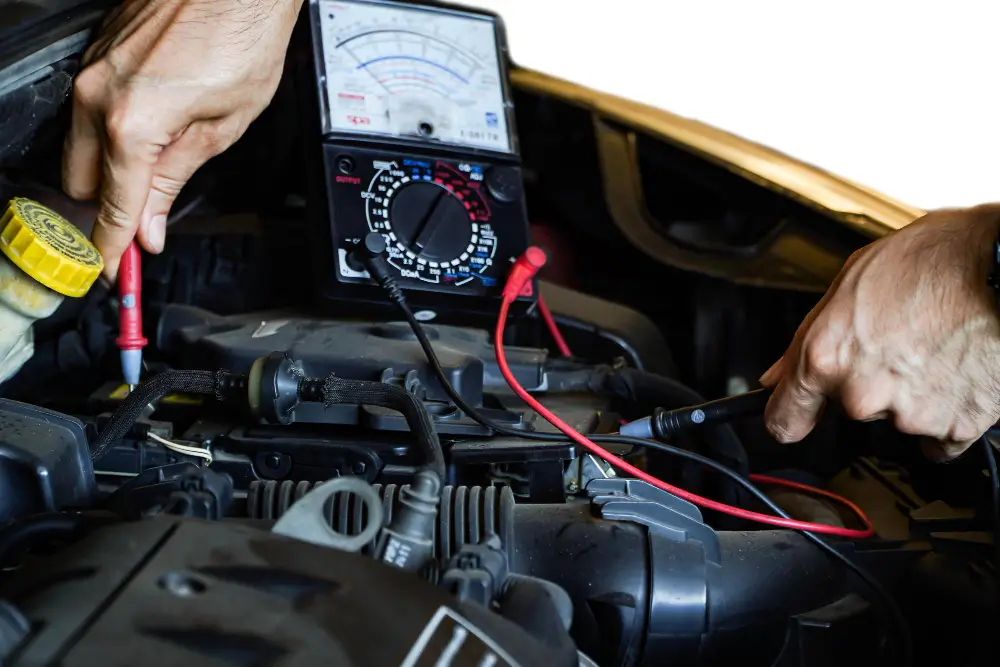
Finding the cause is the hard part. Our electrical service includes inspecting wiring and connections for looseness or damage. Battery voltage and charging output get tested too, so a weak alternator can’t hide behind a lens problem.
You get the findings and a quote before any work starts. Nothing moves forward until you approve it. Appointments hold a bay, so call ahead if you can. Drop-off is also available during shop hours.
Not sure whether it’s a bulb, a lens, aim, or wiring? We’ll diagnose it and explain your options in plain terms. Call (732) 702-3999 or book an appointment online.
Frequently Asked Questions About Dim Headlights
Why are my headlights dim?
Most dim headlights come from cloudy or yellowed lenses, aging bulbs, poor aim, or a wiring or charging fault. Start with what you can see. Haze points to the lens, one weak side points to a bulb or connection, and fading at idle points to voltage.
Can cloudy or yellow headlights be restored?
Mild outside haze can often be improved. In AAA’s 2018 tests, restoration returned light output to about 70 percent of new but produced more glare than DOT criteria allow. Replacing the headlights with original equipment parts restored the most light.
Should I replace both headlight bulbs at the same time?
Yes, in most cases. When one bulb is dim or out, the other is usually the same age and not far behind. Replacing both keeps the beams even.
Why is only one headlight dim?
A failing bulb is the most common reason. Corrosion at the connector, a poor ground on that side, or moisture inside that one housing can also cause it. Water inside the lens won’t wipe away, so the housing needs a closer look.
Is it legal to drive with one headlight out in New Jersey?
New Jersey requires most vehicles to have at least two approved headlamps, with an equal number on each side of the front (N.J.S.A. 39:3-49). A car with one headlight out does not meet that standard. Get it fixed before your next drive after dark.
How much light can cloudy headlights lose?
A lot. AAA’s lab found badly deteriorated low beams produced only 22 percent of the light of new headlights. The test used headlights from two sedans about 11 years old, so your own car may differ.
Need help with something other than lights? Browse our Colonia auto repair services guide.
Ready to Get Your Headlights Checked in Colonia?
Thanksgiving travel starts next week, much of it after dark. If a wipe didn’t fix your dim headlights, find the cause before you go. Call American Auto Repair Center at (732) 702-3999 or contact American Auto Repair Center to book a visit.
We’re at 1131 St. Georges Ave, Colonia, NJ 07067. Hours are Monday to Friday, 8:30 AM to 6:00 PM, and Saturday, 8:30 AM to 4:00 PM.