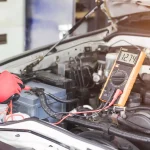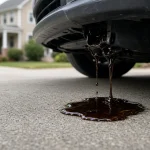
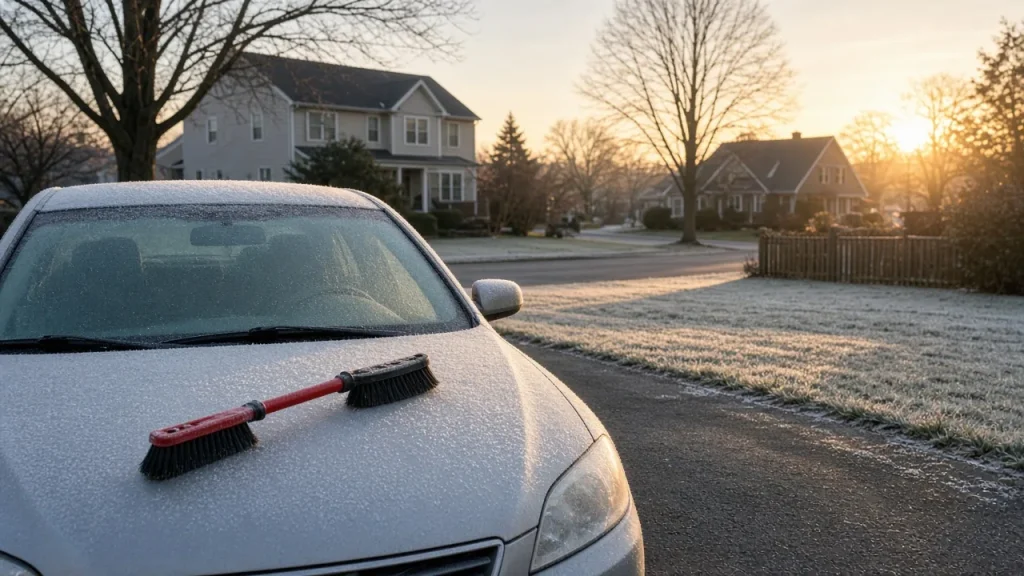
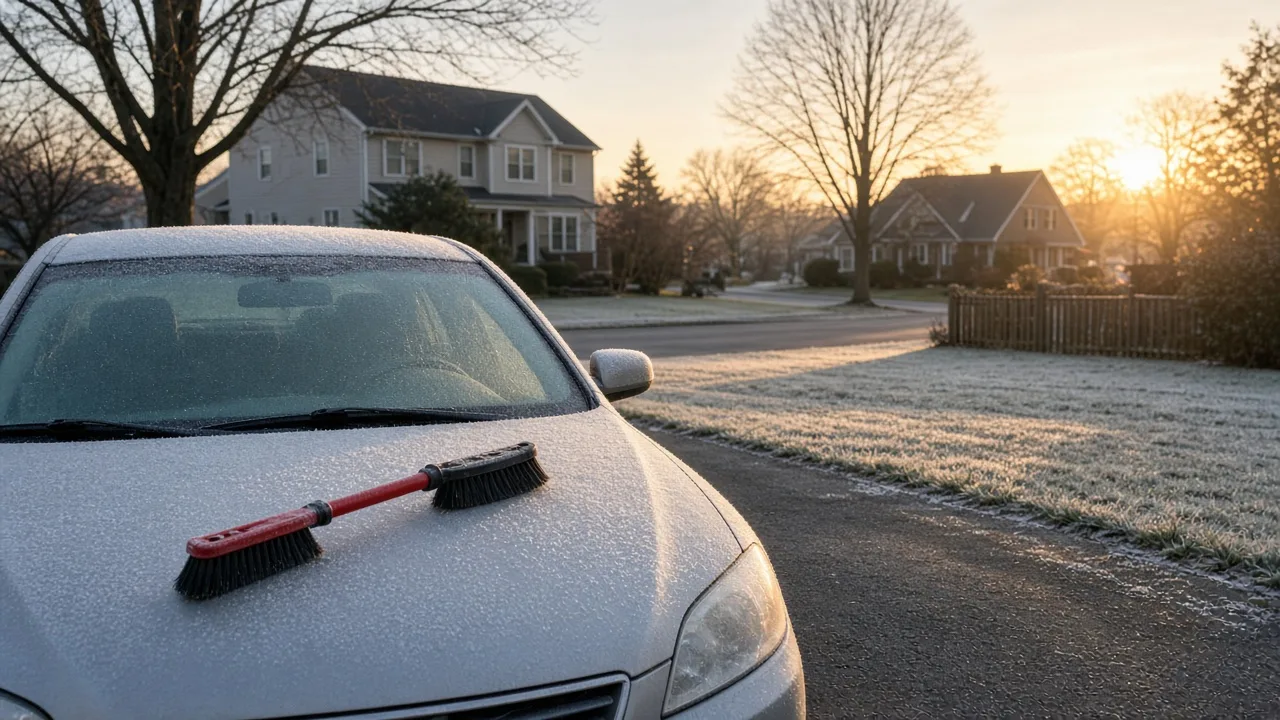
The first frosty morning always finds the weak spot. The engine cranks a little slower. The tire light pops on. The windshield is white, and the heat takes forever to show up.
None of that has to catch you off guard. A little prep in late fall makes those first cold weeks in Colonia a lot less stressful.
This guide walks you through what you can check yourself this weekend, what a shop should check, and what to keep in the trunk. When you would rather hand the whole list to a pro, our preventive maintenance service in Colonia covers the core items in one visit.
More reading: Want the year-round view? See our preventive maintenance schedule for Colonia drivers.
Why cold weather is hard on your car
Cold does not break a healthy car. It exposes the parts that were already tired. A battery that limped through summer, a blade that streaked in September, coolant nobody has tested in years. Winter finds all of them at once.
- Batteries lose starting power. Cold cuts what a battery can deliver, while a cold engine needs more of it to turn over.
- Tire pressure drops. Air contracts as the temperature falls, so tires that were fine in October can read low on a December morning.
- Visibility takes a hit. Slush, road salt and frost test your wipers, washer fluid and defroster every single day.
- Coolant has a second job. Besides keeping the engine from running hot, it has to keep the engine from freezing.
- Short trips add up. Quick runs to the store on St. Georges Ave never let the engine fully warm up or the battery fully recharge.
Driving a hybrid or an electric car? NHTSA notes that range drops when the battery is cold, so plan longer trips with a little extra margin.
Winter prep checklist: what you can check and what the shop checks
You can spot a lot from the driveway. Some things, though, need tools and a lift. Here is how the work splits.
| Item | What you can check | What the shop checks |
|---|---|---|
| Battery | Slow cranking, clicking, a battery light, white or green crust on the terminals | Battery strength and condition test |
| Tires | Cold pressure against the door jamb label, tread, sidewalls and the spare | Tread depth, damage, rotation and a seasonal tire swap |
| Coolant | Reservoir level, with the engine cool only | Freeze point and corrosion inhibitor test |
| Wipers and washer fluid | Streaks, chatter, missed spots and a full reservoir of winter fluid | Blade condition and fluid top off |
| Heat and defrost | Warm air within a normal drive, frost clearing from the glass | Heating system and thermostat check |
| Belts and hoses | Visible cracks or fraying, with the engine off and cool | Inspection for cracks, wear and soft or brittle hoses |
| Brakes | Squealing, grinding or a soft pedal | Brake inspection |
| Lights | A walk around with a helper: headlights, brake lights, signals and flashers | Mention anything you spotted when you book |
| Oil | The due date or mileage on your oil change sticker | Oil and filter change when due |
The right column is the heart of a preventive maintenance visit. You get one clear picture instead of guessing item by item.
Battery: the most common cold-morning failure
If one thing leaves you stuck in a Colonia driveway this winter, it will probably be the battery. AAA points out that summer heat can weaken a battery, and the first cold snap finishes the job.
Watch for these signs now, while the mornings are still mild:
- The engine cranks slower than it used to
- You hear clicking when you turn the key or press start
- Dash lights dim hard during start up
- The battery light comes on while driving
- Crusty buildup sits on the terminals
- The car has needed a jump at least once this year
Any one of those is a reason to get a test before December, not after. Our preventive maintenance visit includes battery testing, and our engine diagnostics and electrical service traces charging problems when the battery is not the whole story.
One safety rule matters here. Never jump a battery that is swollen, leaking or smells like sulfur.
More reading: Already stuck with a car that will not start? Our dead battery and no-start guide for Colonia helps you sort out what is going on.
Tires: pressure, tread and winter tires
Your tires are the only part of the car touching an icy road. Small problems here feel much bigger in January.
Pressure and tread
- Check pressure cold. Do it before you drive, when the tires have sat overnight.
- Use the right number. Fill to the pressure on the driver’s door jamb label, not the maximum printed on the tire.
- Check again as it gets colder. Pressure keeps falling as the temperature drops through the season.
- Look at the tread. Replace tires at 2/32 of an inch, or sooner for wet or snowy roads.
- Look at the sidewalls. Cracks, bulges, or tires older than about six years mean it is time for new ones.
- Do not forget the spare. A flat spare does not help on the shoulder of Route 1.
If that tire light came on during the first chilly morning, our tire pressure light guide explains what it means and what to do.
Should you switch to winter tires?
Winter tires grip much better in snow, slush and cold temperatures. If you drive a lot in winter weather, they are worth considering. Commuters heading out early on the Garden State Parkway feel the difference most.
Already own a winter set? Our wheels and tires service in Colonia handles quick swaps between winter and summer tires each season.
Coolant and antifreeze: freeze protection
Most people think of coolant as a summer thing. It matters just as much in winter. Coolant lowers the freezing point of the liquid in your engine. Plain water can freeze, expand and crack the engine block.
- Check the reservoir only when the engine is cool
- Never open a hot radiator cap or a hot reservoir
- Top off only with the coolant type your owner’s manual calls for
- Do not top off with plain water heading into winter
- Note any puddles under the car or a sweet smell after driving
A level that looks fine does not prove the mix is strong enough. At the shop, a coolant test measures the freeze point and checks the condition of the corrosion inhibitors. Our engine cooling system service handles that test and any repair it points to.
Seeing drips on the driveway? Our coolant leak guide covers what the color and spot tell you.
Wipers, washer fluid and defrost: see the road
A salty film on the windshield at night, with headlights coming the other way, is one of the hardest things to drive through. Clear glass is a safety item, not a comfort item.
- Replace blades that streak, skip, chatter or leave missed spots
- Switch to a winter washer fluid with de-icer so it does not freeze in the lines
- Keep an extra jug in the trunk, since salt season burns through it fast
- Test the front and rear defrosters now, before the first frost
- Clean the inside of the glass too, since film makes fogging worse
If the defroster blows but the frost will not clear, the problem often sits in the heating system. Our auto A/C and heating repair covers the thermostat and the rest of the system that delivers warm air to your windshield.
Notice a dusty smell the first time the heat runs this year? Our burning smell guide explains which smells fade and which need a check.
Heat, brakes, belts and lights before the first storm
These four rarely fail all at once. Still, each one is far easier to fix on a dry November afternoon than in a snowstorm.
Heater
Heat that is weak, slow or never gets hot can point to low coolant or a thermostat problem. Do not wait until January to find out. Book a look through our heating system repair, and we will check the cooling side through our cooling system service if that is where it leads.
More reading: Heat still not getting hot? See our guide to a car heater not blowing hot air in Colonia.
Brakes
Stopping distances grow on wet and icy roads. Brakes that squeal, grind or feel soft have no margin left for winter. Get them looked at through our brake repair in Colonia, or read our brake squeaks and soft pedal guide first.
Belts and hoses
Cold makes rubber stiff. A belt with cracks or fraying, or a hose that feels soft or brittle, is more likely to quit when the temperature dives. Look only with the engine off and cool. A belts and hoses inspection is part of our preventive maintenance service.
Lights
Winter means more driving in the dark. Grab a helper and walk around the car: headlights, brake lights, turn signals and hazard flashers. Wipe the lenses clean, too. Salt haze dims them more than most people expect.
Headlights still look dim after you wipe the lenses? See why headlights look dim at night in Colonia.
Your winter car kit
Most winter trouble is short. A dead battery in a parking lot. A car stuck at the end of a plowed street. The right kit turns those moments into an inconvenience instead of a crisis.
- Ice scraper and snow brush
- Small shovel
- Sand or kitty litter for traction
- Jumper cables
- Flashlight with spare batteries
- Warning triangles or flares
- Blanket, hat, gloves and an extra layer
- Phone charger
- Water and a few snacks
- First aid kit
- Extra winter washer fluid
One more habit belongs here. Keep the gas tank near full. The CDC notes it helps avoid ice in the tank and fuel lines, and it gives you heat if you end up waiting.
New Jersey snow rules and safe winter habits
New Jersey takes snow on cars seriously. Under N.J.S.A. 39:4-77.1, drivers must make reasonable efforts to clear snow and ice from the hood, trunk, windshield, windows and roof before driving.
The fine is $25 to $75 per offense, even if nothing flies off. If flying snow or ice causes injury or property damage, it jumps to $200 to $1,000.
A few habits keep you safer every time it snows:
- Keep the tailpipe clear. Snow packed around it can push carbon monoxide into the cabin.
- Never warm up the car in a closed garage. Carbon monoxide builds fast, as NHTSA’s winter driving tips warn.
- Clear all the glass. A small peephole in the windshield is not enough.
- Clean the sensors and camera. Snow over them can switch off safety features.
- Give the defroster time. Wait for clear glass before pulling onto Route 27 or Inman Ave.
- Check for open recalls. Enter your VIN on NHTSA’s recall lookup before the season starts.
- If you get stuck, stay with the car. Turn on your flashers and keep the exhaust clear while you wait.
What happens at a winter check at American Auto Repair Center
For 25 years, drivers from Colonia, Clark, Iselin, Avenel and Rahway have trusted our shop on St. Georges Ave. A winter check follows the same steps as every visit.
- Inspect. We test the battery’s strength and condition and check tire tread, pressure and condition. We also test the coolant freeze point and look over belts, hoses, brakes, fluids, heat and defrost.
- Quote. We explain what we found in plain words and give you a quote before any work. We only recommend what the inspection shows.
- Repair. We handle the work you approve, including a seasonal tire swap if you have a winter set.
- Confirm. We start the car and check it again with the heat and defrost running, so you leave knowing it is ready.
Most basic services may be done in about an hour. Bigger repairs take longer, and we tell you that up front.
Related reading and how to reach us
Each of these guides goes deeper on one part of your winter list:
- Preventive maintenance schedule for Colonia drivers
- Dead battery or car will not start
- Tire pressure light and flat tires
- Coolant leak causes and next steps
- Burning smell from your car
- Colonia auto repair services guide
Ready to get your car set for winter? Call (732) 702-3999 or stop by 1131 St. Georges Ave., Colonia, NJ 07067. We are open Monday to Friday 8:30 AM to 6:00 PM and Saturday 8:30 AM to 4:00 PM, closed Sunday.
Winter car prep FAQs
When should I get my car ready for winter in New Jersey?
Plan it for October or early November, before the first hard freeze. That gives time to test the battery, check the tires, and fix anything the inspection finds before cold mornings and the first snow.
What does a winter car check include?
At American Auto Repair Center, a preventive maintenance visit covers battery testing, tire pressure and tread, fluid checks including coolant, belts and hoses, brakes, and oil and filter when due. We explain what we find and quote before any work.
Why does my car battery die in cold weather?
Cold reduces the power a battery can deliver while the engine needs more of it to start. A battery already weakened by summer heat or short trips often fails on the first cold morning, so have it tested before winter.
How much does tire pressure drop in the cold?
Tire pressure falls as the temperature drops, which is why the tire pressure light often comes on during the first cold mornings. Check your tires cold and fill them to the pressure on the driver’s door jamb label, not the number printed on the tire.
Should I switch to winter tires in New Jersey?
Winter tires grip much better in snow, slush, and cold temperatures. If you drive a lot in winter weather, they are worth considering. We can swap your tires each season so you always have the right set on.
Do I need to check my antifreeze before winter?
Yes. Coolant protects the engine from freezing, and plain water can freeze and crack it. A coolant test measures the freeze point and checks the corrosion inhibitors. Only check the reservoir when the engine is cool, and never open a hot radiator cap.
Is it illegal to drive with snow on your car in NJ?
Yes. New Jersey law requires drivers to make reasonable efforts to clear snow and ice from the hood, trunk, windshield, windows, and roof before driving. Fines run $25 to $75 per offense, and $200 to $1,000 if flying snow or ice causes injury or damage.
What should I keep in my car for winter?
An ice scraper and brush, a small shovel, sand or kitty litter, jumper cables, a flashlight, warning triangles or flares, a blanket, a phone charger, water and snacks, a first aid kit, and extra washer fluid.