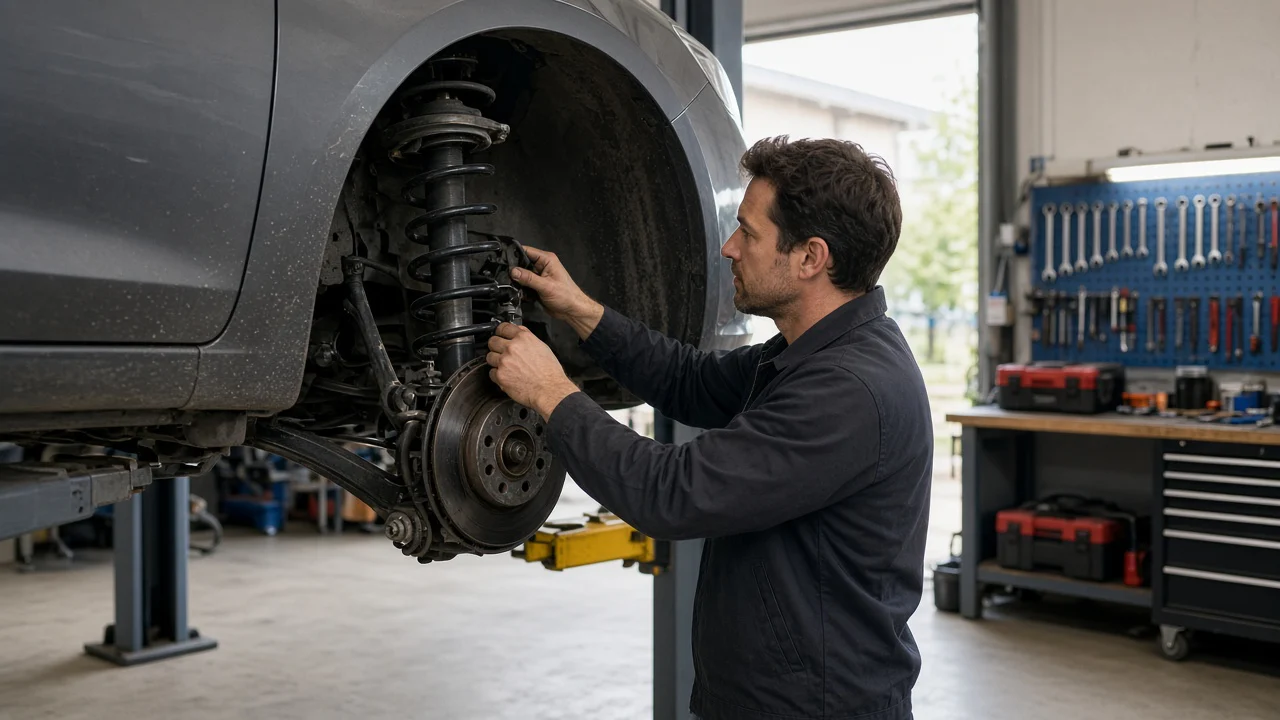
The ride got worse so slowly that you adapted.
Potholes on St. Georges Avenue used to be a thump and done. Now the car keeps bouncing after the bump. A railroad crossing near Woodbridge settles in three rocks instead of one. Braking into a Clark light feels like the nose drops a little farther every month. None of that arrived as a single dramatic failure. Damping faded. You got used to it.
This guide sorts which sensations point to worn shocks or struts, which ones lean toward tires, balance, alignment, or brakes, what a bounce test can and cannot prove, and what a real suspension inspection covers. For booked damper and chassis work, start with shocks and suspension service in Colonia.
Calm steps. No scare copy. Clear next moves so a floaty ride does not chew through a fresh set of tires on Route 27.
American Auto Repair Center is at 1131 St. Georges Ave., Colonia, NJ 07067. Call (732) 702-3999 when you want findings before parts.
Shocks vs struts in plain English
Both parts control bounce after the spring compresses. The spring holds the car up. The damper (shock or strut) slows the rebound so the tire stays planted instead of hopping.
A shock is mainly a damper. A strut often does more. On many front-wheel-drive cars, the front strut is a structural piece. It helps hold geometry and steering. That is why a worn front strut can change how the wheel sits, not only how soft the ride feels.
Plenty of vehicles use struts up front and shocks in the rear. Some use shocks all around. Some use other mixes. The badge on the housing matters less than the job: control bounce, protect tire contact, keep the body from pitching and rolling more than it should.
Wear is usually slow. Oil seeps. Valving softens. Mounts loosen. One corner ages faster after a hard curb hit, but the rest of the axle is not far behind. That is why replacing one side alone can leave the car feeling uneven even when the new part is fine.
First-minute symptom map (what you feel → what it often means)
Use this as a map, not a self-diagnosis.
Keeps bouncing after a bump or railroad crossing. Classic worn damper clue. The spring still flexes. The shock or strut no longer settles the motion in one clean stop.
Harsh over every pavement seam. Worn dampers can feel harder, not softer. The tire loses contact briefly, then slaps back. Drivers often call that “stiff” when the real issue is lost control of the bounce.
Nose-dive under braking or stops that feel longer. Weight shifts forward. Weak front damping lets the nose drop. Soft pedal, grinding, or vibration mainly while stopping still needs a brake look. Dive and brake wear can share one visit.
Rear squat on hard acceleration. Rear dampers or springs that cannot control the weight shift. More common when the car is loaded or you pull away hard from a light.
Body roll or tipping in turns. Sideways lean that feels late or mushy. Sway bar links, bushings, and tired dampers all play roles. A lift inspection sorts which part is loose.
Clunk, knock, or creak over bumps or on lock-to-lock steer. Often mounts, ball joints, sway links, or bushings rather than the damper body alone. Noise plus bounce is a strong booking cue.
Cupped or scalloped tread; edge wear that returns after a balance. Bad damping lets the tire hop and scrub. New tires alone will copy the same pattern if the dampers stay tired.
Honest triage helps. A steering shake that rises smoothly with speed often points more to balance or tire issues. See the complete guide to tire and wheel balancing and wheel balancing in Colonia. A pull with a crooked wheel often means alignment. Still inspect suspension, because worn parts cause alignment to drift. For classic pull and uneven wear with a smooth ride, the existing signs of bad wheel alignment post is useful related reading.
Write down when the bounce shows up: cold start, after highway miles, only with passengers, or only on broken pavement. That note speeds the bay visit. Guessing “it must be the struts” from a forum post is how people buy the wrong corner twice.
Common causes drivers actually feel
Cause → clue → why it matters:
Leaking shock or strut. Oil on the damper body, dirt caked where fluid dried, or a wet streak down the tube. Internal valving fails once fluid leaves. Ride bounce follows.
Worn strut mounts or bearings. Clunk when you turn the wheel at low speed, or a grinding feel at full lock. The damper may still look dry while the mount is done.
Tired bushings, ball joints, or sway bar links. Clunks over bumps, wander on flat pavement, or a knock when you hit a Colonia pothole. These parts let geometry move when it should stay tight.
Sagged or broken coil springs. The car leans, bottoms out on dips, or sits low on one corner. Springs hold height. Dampers control motion. Both can fail on older cars.
One hard pothole or curb event. Sudden new pull, new clunk, or a bent control arm after a sharp hit on local roads. Do not wait for a long Parkway trip to “see if it settles.”
Cupped tires from bad dampers. You spend money on new rubber, then the scallops return. Fix the damping path before or with the tire work. A balance alone will not erase hop that starts in the damper. Wheels and tires services in Colonia pair cleanly with a suspension check when tread already shows the pattern.
DIY bounce test vs a real suspension diagnosis
Push down hard on a corner and let go. One clean settle is the textbook “pass.” Two or more bounces is a rough clue the damper is tired.
A quick visual helps too. Look for wet damper bodies and broken coil springs from a safe stance with the car parked on level ground.
That is where DIY stops being enough. A bounce test does not measure internal valving when the body is dry. It does not prove mount play. It cannot safely confirm ball joint wear. Steering and suspension parts need a lift, proper support, and trained feel for play.
Skip the parts-store “one corner now, the other later” habit unless a tech has already inspected both sides. An axle that mixes a fresh damper with a tired twin often feels worse than the worn pair you knew. Replace-in-pairs is the usual rule after inspection, not a sales slogan.
At American Auto Repair Center the path matches the live suspension process:
- Road feel notes: You describe bounce, dive, clunks, and when they show up.
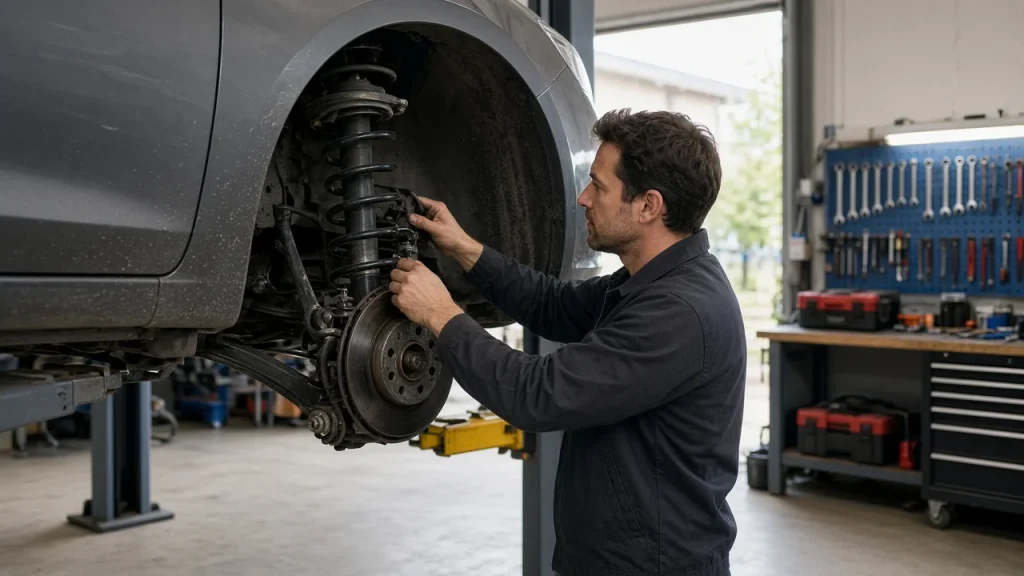
- Lift inspection: Dampers for leaks and mounts; bushings, ball joints, control arms, tie rods, sway links, and springs.
- Quote before parts: Plain English on what failed and what can wait.
- Repair: Dampers matched to the vehicle; torque to spec; replace related worn links when the evidence says so.
- Confirm: Alignment check when struts or suspension parts change wheel angles.
That Inspect → Quote → Repair → Confirm rhythm lives on shocks and suspension service in Colonia. Bring notes on which bumps trigger the bounce. Those details shrink the guesswork.
Is it safe to keep driving to the shop in Colonia?
Use this as a practical filter, not a dare.
Schedule soon, drive carefully when: the main complaint is mild bounce or comfort, the car tracks straight, brakes feel normal, and there is no growing clunk. Short daylight trips around the area are usually fine while you book.
Book sooner when: clunks are growing, the car wanders, brake dive unsettles stops, or cupped tires bring vibration. Avoid hard cornering and heavy highway loads if control feels off. Soft pedal or longer stops deserve a brake repair check in the same visit.
Inspect before a long trip when: you hit a hard pothole and a new pull, noise, or lean appeared. That is not a “see if it settles on the Parkway” moment.
Shop hours are daytime Monday through Saturday. Monday to Friday 8:30 AM to 6:00 PM. Saturday 8:30 AM to 4:00 PM. Sunday closed. Plan arrival inside published hours.
Drivers heading in from Woodbridge, Clark, Edison, Avenel, or Rahway can call (732) 702-3999 first with a short symptom list. A quick description often clarifies whether a careful drive fits or you should take it easy until the bay opens.
Why alignment belongs in the same conversation
Strut and suspension work changes how camber, toe, and caster relate. New parts reset the geometry the old worn parts had settled into. Skipping alignment after struts can leave a crooked wheel when you drive straight and chew the new tires you just paid for.
That does not mean every bumpy-ride visit is “only alignment.” A smooth car that pulls and wears edges unevenly may start on the alignment rack. A bouncy car with cupped tread needs dampers and related parts checked first, then angles verified.
American Auto Repair Center verifies alignment after suspension service that affects angles. Camber, toe, and caster get checked against manufacturer specs so the wheel sits straight on flat pavement.
For pull, uneven wear, and crooked-wheel signs with a mostly smooth ride, read what are the signs of bad wheel alignment, then book wheel alignment in Colonia when you are ready. When bounce and dive lead the story, keep shocks and suspension as the primary path and let the tech decide when the aligner is part of the same repair.
What happens at American Auto Repair Center
You pull into 1131 St. Georges Ave., Colonia, NJ 07067. Call (732) 702-3999 to describe bounce, dive, or clunks before you arrive if that helps.
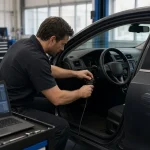
In the bay, the tech inspects shocks and struts for leaks and mount condition. Bushings, ball joints, control arms, tie rods, sway bar links, and coil springs get checked for play, cracks, and sag. Findings come in plain English. Then you see an upfront quote. Parts go on after you approve.
Dampers are matched to the vehicle. Mounting bolts get torqued to spec so the new parts do not work loose. When struts or other angle-affecting parts change, alignment is verified so the wheel sits straight and tires wear evenly on your commute through Woodbridge, Clark, Edison, Avenel, or Rahway.
Soft pedal or longer stops while the car is already on the lift? An honest brake check belongs in the same visit. See brake repair in Colonia and the deeper walkthrough on brake squeaks, soft pedal, and vibration in Colonia.
Ask what must be fixed now for control and tire life, and what can wait while the car is open. That split keeps the visit honest and the bill predictable.
Sedans, SUVs, and trucks do not share the same damper ratings. Towing, curb weight, and how you drive around the area all matter when matching parts. Mention trailers, rideshare miles, or rough-road shortcuts so the quote fits real use.
For a wider map of what to book and when, use the Colonia NJ auto repair services guide.
Related problems that share the ride feel
Ride complaints rarely travel alone.
Steering shake that rises with speed. Often balance or tire issues more than damper bounce. Pair with wheel balancing in Colonia and the complete guide to tire and wheel balancing.
Pull, uneven wear, or a crooked wheel with a smoother ride. Start with alignment signs and wheel alignment in Colonia. Still mention any bounce so suspension is not skipped.
Vibration mainly when stopping. Point to brakes, not only dampers. Use brake repair in Colonia and brake squeaks, soft pedal, and vibration.
Tire condition and replacements. Cupping, scallops, and edge wear belong with wheels and tires services in Colonia after the damping path is honest.
Scheduled undercar checks. Catch leaks and loose links before the ride lectures you. Fold that into preventive maintenance in Colonia.
Tell the advisor every bounce, clunk, pull, and tread pattern you noticed. One visit can sort overlapping paths when the story is complete.
Frequently asked questions
Why does my car keep bouncing after bumps in Colonia?
Often worn shocks or struts that no longer damp spring movement. A lift inspection confirms leaks, mounts, and related joints before parts go on.
What’s the difference between shocks and struts?
Both control bounce. Struts often also support suspension geometry and steering. Your vehicle may use one, the other, or a mix by axle.
Do I need an alignment after strut replacement?
Usually yes after struts or other suspension parts that affect wheel angles. Skipping it can leave a pull and uneven tire wear.
Should shocks or struts be replaced in pairs?
Generally replace both sides of an axle so handling stays balanced. A tech confirms after inspecting wear on each corner.
Is a bounce test enough to diagnose bad shocks?
It is a rough clue only. Internal wear, mounts, and ball joints need a proper inspection on a lift.
Can bad shocks ruin my tires?
Yes. Cupping, scalloping, and uneven contact are common when dampers cannot keep the tire planted. New tires alone often copy the pattern.
Nose-dive when braking: shocks or brakes?
Dive often points to dampers, but a soft pedal or noise needs a brake inspection too. Both can be checked in one visit.
How often should shocks and struts be inspected?
Follow the owner’s manual. Inspect sooner if the ride worsens, you hit a hard pothole, or you tow and drive rough roads. Condition and symptoms beat a single universal mileage rule.
Get the suspension checked before bounce chews your tires
A bumpy ride is a message. Symptom maps point to dampers, mounts, joints, or tires. DIY bounce tests have limits. Diagnosis finds the leak, play, or sag. Repair plus alignment confirmation when angles change keeps the car planted.
Book shocks and suspension service in Colonia or call (732) 702-3999. American Auto Repair Center at 1131 St. Georges Ave., Colonia, NJ 07067 will inspect dampers and related parts, explain the root cause, quote upfront, and confirm the ride and alignment after the work.