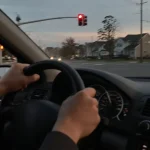
You roll up to the red light on St. Georges Ave. Your foot is on the brake, the RPM needle sinks, and the engine just quits. The dash lights up. You restart it, the light turns green, and you drive off. Two stops later, it happens again.
That is a stall. The engine cannot hold itself running at idle. It is unsettling, and it is a problem worth fixing soon, because a car that dies in traffic is harder to steer and stop.
This guide explains how a stall differs from a rough idle or a no-start, when it is safe to keep driving, and what to do the moment the engine dies. You will also see the most common causes, the clues that point to each one, and how a shop finds the real fault.
If you already want it checked, start with our engine diagnostics in Colonia. American Auto Repair Center is at 1131 St. Georges Ave, Colonia, NJ 07067. Call (732) 702-3999 during shop hours.
More reading: If the engine shakes at a stop but keeps running, read our car shaking at idle guide for Colonia first.
Stall, rough idle, or no-start? Quick triage
These three problems feel related, but they point to different checks. Pick the one that matches what your car does.
Dies at a stop
The engine runs fine while you drive, then cuts out as you slow down or sit at a light. It usually restarts. This means the engine cannot hold idle. That is what this guide covers.
Shakes but keeps running
The seat and steering wheel tremble at a stop, but the engine never dies. That is a rough idle, often from a misfire or a worn motor mount. Our car shaking at idle guide walks through it.
Will not restart
The engine dies and then only clicks, cranks slowly, or cranks without catching. That is a no-start, and the battery or charging system is often involved. See our dead battery and no-start guide.
Is it safe to drive a car that stalls?
A stall is not something to put off. When the engine dies, power steering and brake assist drop away. The car still steers and stops, but the wheel gets heavy and the brake pedal gets hard once the stored assist is used up. You need much more effort than usual.
Drive gently and book a check soon
- It stalled once and restarted right away
- The check engine light is off or solid, not flashing
- The temperature gauge stays in its normal range
- Power feels normal once you are moving
- There is no smell of raw fuel
Stop driving and get help
- It stalls again and again in traffic
- The check engine light is flashing
- The battery light is on and your lights are dimming
- The temperature gauge is climbing
- You smell raw fuel
- It cuts out while you are moving at speed
This matches the rule on our check engine light diagnostics page. A steady light with normal driving means get to the shop soon. A flashing light, shaking, or loss of power means pull over and call.
What to do the moment it stalls
A stall at a busy light on Route 27 or Route 1 can rattle anyone. Keep these steps simple and focus on safety first.
- Turn on your hazard lights so drivers behind you know something is wrong.
- Hold the wheel firmly and press the brake harder than usual. Both take more effort with the engine off.
- Shift to Park or Neutral and try one restart so you can move.
- If it will not stay running, get fully off the road before you do anything else. If you cannot move safely, stay buckled in and call for roadside help.
- Once you are safe, note what you were doing: braking, A/C on, engine warm or cold, or just filled the tank.
Skip roadside fixes. Do not open the hood in a live lane, and do not keep restarting a car that dies every time.
Common causes of stalling at a stop
At idle, the engine runs on the least air and fuel it ever gets. At the same time, the A/C, lights, fans, and transmission all add load. Any weak part in that balance can make the engine die. These are the usual suspects.
Throttle body deposits
Carbon builds up around the throttle plate and chokes off the small stream of air the engine needs at idle. Some cars also need an idle relearn after cleaning, which is why it belongs in a shop visit.
Idle air control
Many older engines use a separate valve to manage idle air. When it sticks or wears out, the idle drops too low as you stop, and the engine dies.
Vacuum leak
A cracked hose, a leaking intake gasket, or a split brake booster hose lets in air the engine does not measure. The fuel mix goes lean and the idle falls apart.
Airflow sensor
A dirty or failing airflow sensor misreads how much air comes in. The computer then sends the wrong amount of fuel, and the engine can stumble or die at low speed.
Fuel delivery
A weak fuel pump, a clogged filter, or low fuel pressure can keep up while cruising but fall short at idle or as you slow down.
Ignition
Worn plugs or a weak coil can cause misfires bad enough to kill the engine at a stop. If the car shakes first, our idle shake guide covers misfires in detail.
Charging system
If the alternator output is low, voltage can sag at idle when the lights, blower, and defrost are all on. The engine may stumble or die, often along with dim lights or a battery warning light.
Torque converter
On automatics, the torque converter should release as you stop. If it stays locked, it drags the engine down like stopping a stick shift without the clutch. Our transmission services in Colonia cover this.
When it stalls tells us a lot
The timing of a stall is one of the best clues you can give a technician. Find the row that matches your car.
| When it stalls | Often points to | Read next |
|---|---|---|
| Only when braking to a stop | Vacuum leak at the brake booster, or a torque converter that does not release | Transmission services |
| With the A/C on | Idle control that cannot handle the added load | This guide |
| Only when warm or after highway driving | Fuel delivery, a heat-sensitive sensor, or a cooling problem | Car overheating guide and cooling system repair |
| On cold mornings | Idle control, a sensor, or fuel | This guide |
| Lights dim or battery light on | Charging system | Dead battery guide |
| Right after filling the tank | A fuel vapor valve stuck open, which needs testing to confirm | This guide |
| Shakes first, then dies | Misfire | Idle shake guide |
| Stalls and will not restart | No-start problem | No-start guide |
A table narrows the search. It does not replace testing, because two causes can share the same symptom.
Why stalling can show up in fall
Many drivers first notice a stall when the weather turns. That is not a coincidence.
Cold mornings make the engine work harder right after a start. The heater blower, rear defrost, and headlights all draw power at idle. Rush hour waits on Inman Ave or Route 1 also mean more time sitting still.
A weak idle part that got by all summer has less room to hide. The extra load is just enough to tip it over. If your car started dying at lights in October, the season may have exposed a problem that was already there.
What to note before you come in
Stalls often come and go. Good notes help a technician recreate the problem faster.
- When it happens: cold or warm, while braking, with the A/C on, or after a fuel-up.
- How it dies: a slow fade in RPM or a sudden cut.
- Whether it restarts right away or takes a few tries.
- Any warning light, and whether it is solid or flashing.
- Sounds or smells, such as a hiss, a fuel smell, or a clunk.
- Recent work, such as a new battery or other repairs.
Do not clear codes or disconnect the battery before your visit. That can erase stored data and learned idle settings the shop needs to find the fault.
Why a quick code read may not catch it
Many drivers expect a scan tool to name the broken part. Stalls do not always work that way.
- A stall does not always set a code, especially if it only happens now and then.
- A code points to a system, not always the exact failed part.
- Intermittent stalls can take longer to find, because the fault has to show up during testing.
That is why we test before we replace parts. Swapping sensors on a guess can cost you money and still leave the stall. Our engine and electrical diagnostics are built around finding the cause first.
What happens at American Auto Repair Center
We have been fixing cars for 25 years. Every stall visit follows the same clear path: Inspect, Quote, Repair, Confirm.
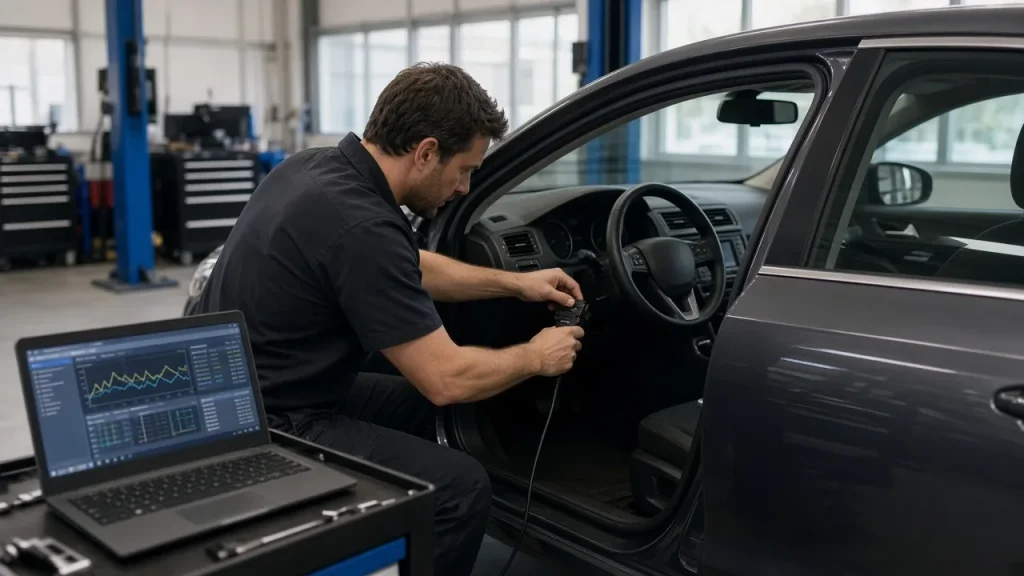
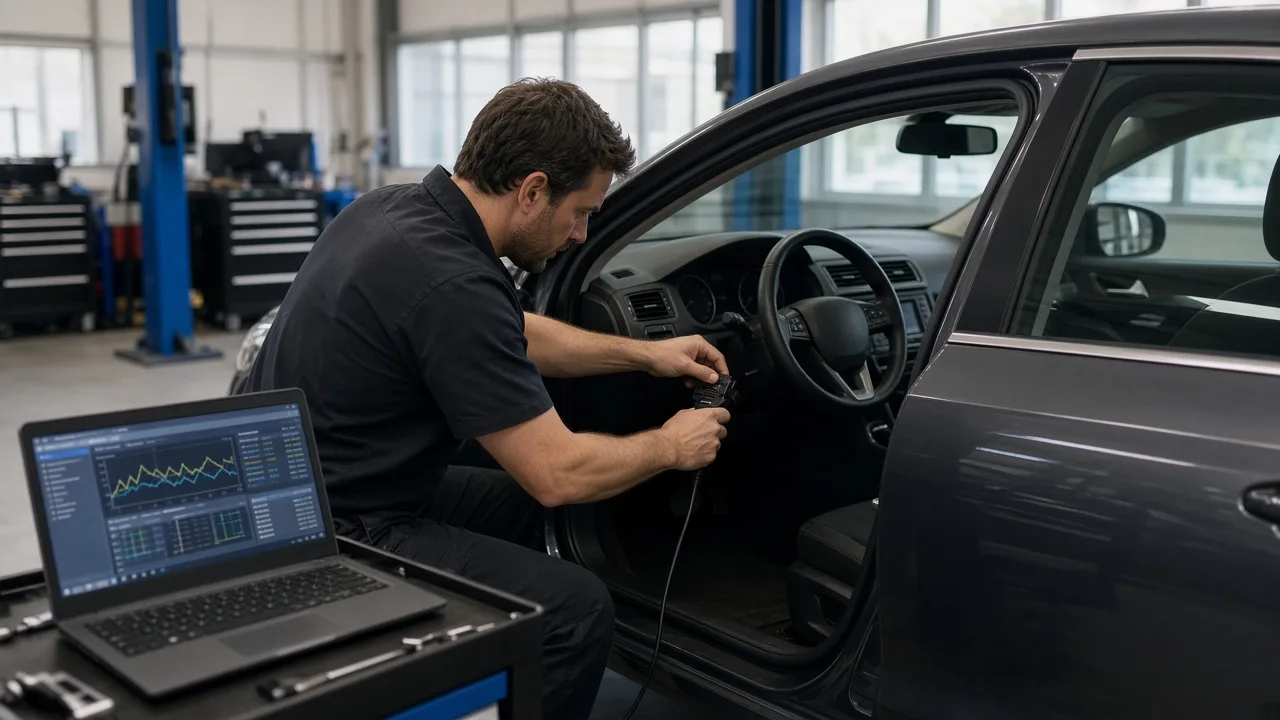
- Inspect. We scan for codes, watch live engine data at idle, check for air leaks, test the battery and alternator, and check fuel delivery. On automatics, we also check how the torque converter behaves at a stop.
- Quote. We explain what we found in plain words and give you a quote before any work starts.
- Repair. We fix the cause you approved, nothing extra.
- Confirm. We road test with real stops, with the A/C on and off, to make sure the idle holds.
If a warning light is part of the story, our check engine light diagnostics cover that side too. We are open Monday to Friday 8:30 AM to 6:00 PM and Saturday 8:30 AM to 4:00 PM. We are closed Sunday.
Keep it running at every stop
Most stalls trace back to parts that wear slowly. Routine care catches many of them early.
- Replace air and fuel filters on the schedule in your owner’s manual.
- Replace spark plugs when your manual calls for it.
- Have the battery and charging system tested at routine visits, especially before winter.
- Get a slow fade in idle checked before it turns into a full stall.
Our preventive maintenance in Colonia covers these checks. For a simple plan, see our preventive maintenance schedule guide.
Related problems and next steps
A stall often travels with other symptoms. These guides cover the ones we see most with it.
- Car shaking at idle in Colonia
- Check engine light in Colonia
- Dead battery or car will not start
- Transmission slipping in Colonia
- Car overheating in Colonia
- Colonia auto repair services guide
Get the stall checked
A car that dies at a stop is telling you something is weak. One stall gives you time to book. Repeated stalls, a flashing light, or a climbing temperature gauge mean stop and call. Either way, testing finds the cause faster than guessing.
Book engine diagnostics at American Auto Repair Center. We serve drivers from Colonia, Woodbridge, Clark, Iselin, Avenel, and Rahway. Call (732) 702-3999 or visit us at 1131 St. Georges Ave, Colonia, NJ 07067.
Frequently asked questions
Why does my car stall when I come to a stop?
As you slow down, the engine drops to idle and has the least air and fuel to work with, while the A/C, lights and transmission all add load. A vacuum leak, a dirty throttle body, a weak fuel supply or low charging output can make it unable to hold idle, so it dies.
Is it safe to drive a car that stalls at idle?
Do not put it off. When the engine dies, steering and braking take much more effort. If it stalls once and restarts with no flashing light, drive gently and book a check soon. If it stalls again and again, the check engine light flashes, or the temperature climbs, stop driving and call for help.
Why does my car stall when I brake?
A common cause is a vacuum leak at the brake booster or its hose, which upsets the air mix as the engine returns to idle. On automatics, a torque converter that does not release when you stop can also pull the engine down. Testing tells them apart.
Can a bad alternator or battery make my car stall?
Yes. If the alternator output is low, voltage can drop at idle when lights, fans and defrost are on, and the engine may stumble or die. Warning signs include dim or flickering lights, a battery warning light, or a car that keeps needing a jump.
Why does my car stall with the A/C on?
The A/C compressor adds load at idle. If the idle control or another part is already weak, that extra load can be enough to stall the engine.
Will the check engine light always come on if my car stalls?
No. Some stalls never set a code, especially if they happen now and then. That is why it helps to note when it happens, such as warm or cold, braking, or right after filling up.
Can a dirty throttle body cause stalling?
Yes. Deposits around the throttle plate can restrict the small amount of air the engine needs at idle. Some cars also need an idle relearn after cleaning, so it is best done as part of a diagnostic visit.
How does American Auto Repair Center find the cause?
We scan the system, watch live engine data at idle, check for air leaks, test the battery and alternator, and check fuel delivery. Then we explain what we found and quote before any work. Booking ahead helps, or call (732) 702-3999 during shop hours for the soonest opening.