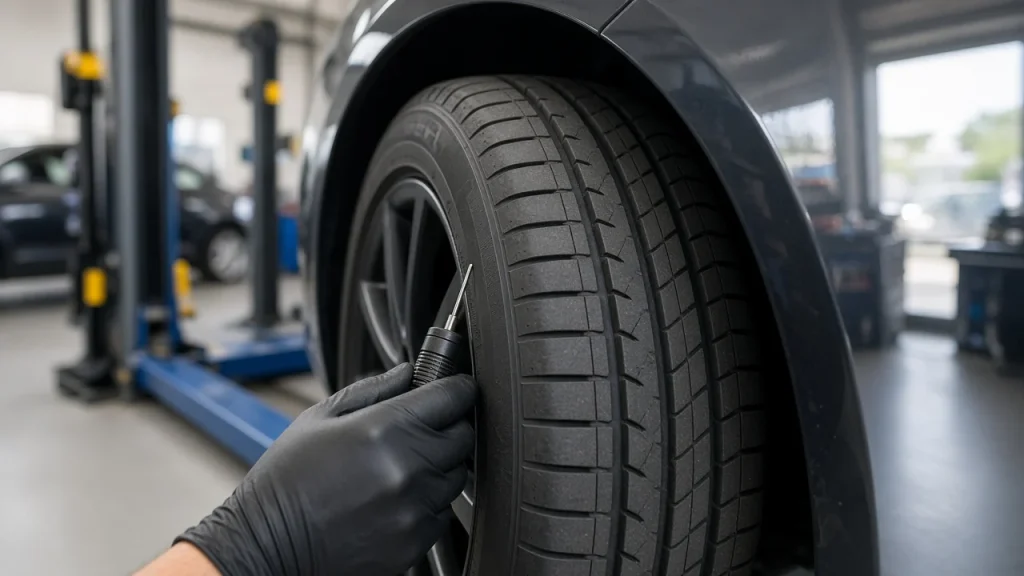
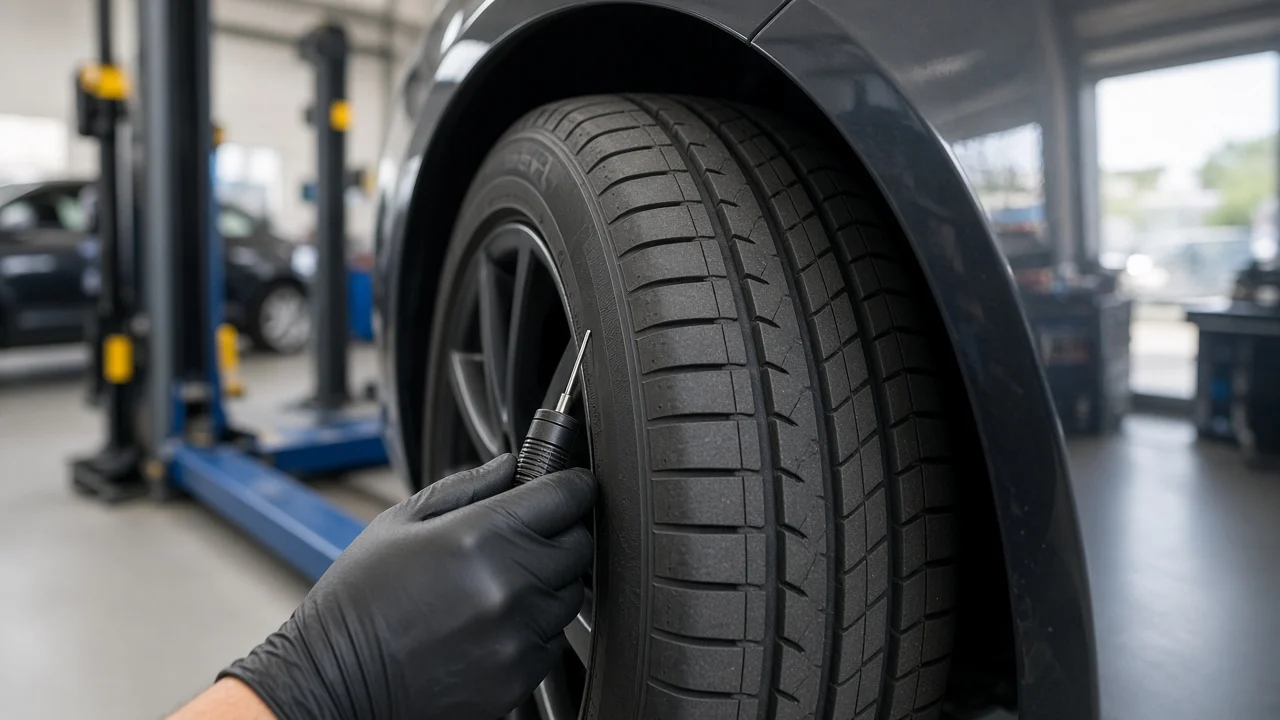
You crouch down to check a tire and notice something odd. One edge is nearly bald. The rest of the tread still looks fine.
That is not “just old tires.” Tires wear evenly when the car sits right, the pressure is right, and the suspension keeps the rubber planted. When one part of the tread disappears faster than the rest, something is pushing it there.
Colonia drivers see this a lot. St. Georges Avenue errands, local side streets with patched pavement, and regular runs toward the Parkway or Turnpike corridor all put load on tires, angles, and shocks. A pothole you forgot about in March can show up as a shaved edge by fall.
This guide teaches you how to read the pattern. Inside edge, outside edge, center, cupping, and feathering each point toward a different first check. You will learn when the next step is wheel alignment in Colonia, when it is pressure or rotation, when it is shocks, and when the tire is simply done and needs the wheels and tires services in Colonia path.
Calm triage. Clear next steps. No scare copy.
American Auto Repair Center is at 1131 St. Georges Ave., Colonia, NJ 07067. Call (732) 702-3999 during daytime shop hours when you want findings before parts.
Is it urgent? Cosmetic wear vs stop-driving clues
Most uneven wear is a “book it soon” problem, not a “park it tonight” problem. A few clues change that.
Schedule soon and drive normally when: the wear is uneven but the tread still sits above the wear bars, there is no bulge or exposed cord, and the car tracks straight with no new vibration. Keep the pressure correct and avoid long trips on that set until the bay has looked.
Get inspected before the next highway run when: you see cords or steel showing, a bulge on the sidewall, deep cupping with a growing thump or hum, one corner balding much faster than the others, or pull plus a worn edge together. Those clues raise the priority.
Why the difference? A worn edge has less rubber to grip in rain. A bulge or exposed cord means the tire structure is compromised. Pull plus edge wear usually means the angle problem is still active and still eating rubber every mile.
American Auto Repair Center is not a 24/7 mobile tire or alignment service. It is a Colonia shop with published daytime shop hours. If a tire fails after hours, use a tow or roadside provider, then bring the car in during shop hours.
Drivers from Woodbridge, Clark, Edison, Avenel, or Rahway can call (732) 702-3999 with a short description first. Which tire, which edge, and any pull or vibration help the advisor set the right inspection path.
Wear-pattern atlas: what you see and what it often means
Use this as a starting filter, not a parts order. Patterns overlap. One visit may check more than one system.
Inside-edge wear. The inner shoulder wears faster than the outer one. This often points to camber or toe alignment. Worn control arm bushings can also let the angle drift under load, so the shop checks for looseness before setting angles.
Outside-edge or shoulder wear. Both shoulders wearing faster than the center usually means underinflation. Only the outer shoulder wearing can mean alignment, hard cornering habits, or low pressure on that corner. The shop confirms which one it is before recommending work.
Center wear. The middle of the tread wears faster than both edges. This often starts with overinflation. The tire bulges slightly in the middle and carries more load there. Pressure comes first, then an inspection if the pattern keeps going.
Cupping or scalloping. Patchy high and low spots around the tire, often felt as a rhythmic thump or growl. This usually means the tire is bouncing instead of staying planted. Worn shocks or struts and loose suspension parts sit high on the list. That path lives in shocks, struts, and suspension in Colonia.
Feathering or saw-tooth tread. Run your hand across the tread. If the tread blocks feel smooth one way and sharp the other way, that is feathering. It often points to toe misalignment, where the tire scrubs sideways as it rolls.
One tire much worse than the other three. Especially after recent work, a curb hit, or a pothole. This points to a bent part, a sticking brake, or angles that moved on that corner. The shop rechecks alignment and suspension play there first.
Honest note: the atlas narrows the guess. It does not replace a lift, a pressure gauge, and alignment readings.
Alignment angles in plain English (why rubber gets shaved)
Alignment is three small numbers that decide how each tire meets the road. Small numbers. Big effect on tread life.
Camber is tilt. Look at the car from the front. If the top of the tire leans in or out, that is camber. Too much inward tilt loads the inside edge. Too much outward tilt loads the outside edge. Over thousands of miles, that lean shaves one shoulder.
Toe is pointing. Look down from above. If the fronts of the tires point slightly toward each other, that is toe-in, like being pigeon-toed. If they point apart, that is toe-out. Either way the tire scrubs sideways while it rolls forward. Feathering and fast edge wear are the classic signs.
Caster is steering feel. Caster is the angle of the steering axis viewed from the side. It affects how stable the car feels at speed and how well the wheel returns to center after a turn. It shows up more as wander or heavy steering than as a classic wear stripe.
So why does an angle drift? Potholes, curb taps, worn bushings, and replaced suspension parts are common reasons. A car can leave the factory in spec and slowly move out over a few rough winters.
A computerized alignment measures each angle against the factory spec for your vehicle and adjusts what is out. That is the work on wheel alignment in Colonia: front, four-wheel, or thrust alignment depending on the car and the readings.
Pressure, rotation, and “is it just tires?”
Before anyone talks about angles, check the basics. Pressure and rotation explain a lot of uneven wear on their own.
Pressure. Check it cold, before driving, with a decent gauge. Match the number on the driver door sticker, not the max number printed on the sidewall. Low pressure wears both shoulders. High pressure wears the center. One tire that keeps losing air may have a slow leak or a valve issue worth a look.
Rotation. Front and rear tires do different jobs. On many cars the fronts steer and carry more braking load, so they wear faster and differently. Rotation moves tires between positions so the wear evens out across the set. Skip it for too long and the difference between front and rear gets big.
Here is the clear split:
- Rotation evens wear across positions.
- Alignment sets the angles so each tire wears evenly in the first place.
- Neither one brings back tread that is already gone.
Rotation will not fix a pull. Alignment will not fix a tire with a bald shoulder. If the tread is already worn to the bars or damaged, replacement comes next through wheels and tires services in Colonia, which also covers flats and TPMS warning lights.
How often should you rotate? Follow your vehicle guidance and what the inspection shows. Many drivers fold it into regular service so it never gets forgotten. The preventive maintenance schedule for Colonia shows how tire checks fit into a calendar.
When alignment alone will not hold (suspension, brakes, balance)
“Get an alignment” is common advice for any tire wear. Sometimes it is right. Sometimes it treats the symptom and the wear comes right back.
Cupping plus a bouncy ride. That is a suspension story first. Worn shocks or struts let the tire hop, and each hop scuffs a patch of tread. Aligning the car without fixing the bounce leaves the cause in place. Start with shocks and suspension in Colonia.
Shake at highway speed without a clear wear stripe. That usually points to balance or the tire-and-wheel assembly. The steering wheel shakes at highway speed guide for Colonia owns that decision tree, and wheel balancing in Colonia is the booked path.
Pull mainly when braking. A sticking caliper or uneven brake can drag one side and mimic an alignment pull. It can also wear that corner faster. See brake squeaks, soft pedal, and vibration in Colonia and brake repair in Colonia.
Wear returns soon after an alignment. That is a strong hint that a part is loose. Tie rod ends, ball joints, and control arm bushings can let the angle shift every time the car hits a bump. The shop should inspect for play before setting angles again. Otherwise you pay for alignments and new tires on repeat.
Honest rule: alignment fixes angles. It does not fix worn shocks, sticking brakes, loose joints, or a heavy tire. A good inspection tells you which one you have before you spend.
DIY observation checklist before you call
A few minutes of owner notes beats a vague “my tires look weird.” None of this replaces a bay inspection.
Write down:
- Which tire or tires show the uneven wear
- Which part of the tread: inside edge, outside edge, center, patchy, or feathered
- The feathering direction if you feel it (smooth one way, sharp the other)
- Cold tire pressures on all four
- Any recent pothole, curb hit, new tires, or suspension work
- Whether the car pulls or the steering wheel sits off-center going straight
- Any bounce after bumps, clunks over bumps, or shake at a certain speed
Safe DIY:
- Check and set pressure to the door sticker when the tires are cold
- Walk around for bulges, nails, cuts, or exposed cords
- Glance at tread depth against the wear bars. The penny check is a rough guide only, not a measurement.
Shop-needed:
- Alignment readings and adjustment
- Suspension play check on a lift
- Balance and tire condition checks
- Brake inspection when pull or heat is part of the story
- TPMS diagnosis when the warning light stays on
Skip home alignment hacks with string or tape measures. Small angle errors still cost tread, and guessing can make it worse. Your job is a clean symptom list. The bay’s job is the measurement.
Take a quick photo of the worn tread in daylight. It helps the advisor see the pattern before the car is even on the lift.
What happens at American Auto Repair Center
You pull into 1131 St. Georges Ave., Colonia, NJ 07067. Call (732) 702-3999 first if you want to describe which tire and which edge is wearing.
In the bay the visit follows Inspect → Quote → Repair → Confirm:
- Inspect the tread. Check each tire’s wear pattern and depth against the wear bars.
- Check pressure. Low or high pressure gets corrected and noted, since it changes how the pattern reads.
- Check for looseness. When the pattern points to suspension, the tech looks for play in shocks, struts, bushings, and steering joints before any angle work.
- Measure alignment. A computerized alignment reads camber, toe, and caster against factory specs. Front, four-wheel, or thrust alignment as the car needs.
- Quote in plain English. What must be fixed now, what can wait, and why. Before and after readings explained without jargon.
- Repair after approval. Adjust angles, replace worn parts, rotate tires, or replace tires that are already spent. No silent extras.
- Confirm. Check tracking and steering wheel position so the car drives straight before you leave.
That path lives on wheel alignment in Colonia. Bring your notes. Mention any recent curb hit or new tires. Say whether the car pulls or bounces.
Service happens during published daytime shop hours. This is a shop visit, not a mobile service. Drivers from Woodbridge, Clark, Edison, Avenel, and Rahway get the same process.
Related problems that feel like “just tire wear”
Tire wear rarely travels alone. Match what you feel to the right guide below.
Pull to one side or a crooked steering wheel. See wheel alignment in Colonia and what are the signs of bad wheel alignment for the quick sign list.
Bouncy or floaty ride. Use shocks, struts, and suspension in Colonia and shocks and suspension in Colonia.
Steering shake at highway speed. Start with the Colonia highway shake guide and wheel balancing in Colonia. For background, read the complete guide to tire and wheel balancing.
Vibration when braking. Point to the Colonia brake vibration guide and brake repair in Colonia.
Flats, TPMS lights, or tread that is already gone. Book wheels and tires services in Colonia.
Regular tire and chassis checks. Fold rotations and wear checks into preventive maintenance in Colonia.
For a full map of what to book and when, use the Colonia NJ auto repair services guide.
Tell the advisor every symptom you noticed. One visit can sort overlapping causes when the story is complete.
Frequently asked questions
What causes uneven tire wear in Colonia?
Common causes include camber or toe misalignment, incorrect tire pressure, overdue rotation, worn shocks or struts, and loose steering or suspension parts. Brake drag can play a role too. The wear pattern plus a shop inspection usually points to the right first check.
Does uneven tire wear always mean I need an alignment?
No. Clean inside-edge wear and feathering often point to alignment first. Cupping usually needs a suspension check first. Center wear often starts with pressure. The pattern decides the order.
What does cupping or scalloping on a tire mean?
Patchy high and low spots usually mean the tire is bouncing instead of staying planted. Worn shocks, struts, or loose suspension parts are common causes. Book a suspension and tire inspection.
Will rotating my tires fix uneven wear?
Rotation slows how uneven the set gets and helps you spot patterns earlier. It does not fix bad angles or worn parts. Fix the cause, then rotate on a schedule that fits your vehicle.
Do I need an alignment after new tires?
It is a smart move. It helps the new set meet the road at the right angles so it does not repeat the old wear pattern. It is also worth checking after major suspension work.
How is uneven wear different from a steering wheel that shakes on the highway?
Highway shake often points to balance or the tire-and-wheel assembly first. Uneven tread patterns more often point to alignment, pressure, or suspension. A hard pothole hit can cause both, so one visit may check both.
Can I keep driving on unevenly worn tires?
If the tread is still above the wear bars and there is no bulge, cord, or severe vibration, schedule service soon and keep the pressure correct. Bald edges, damage, or worsening pull or vibration mean get inspected before long trips.
Does American Auto Repair Center offer 24/7 mobile alignment or tire service?
No. AARC is a Colonia shop with published daytime shop hours. Service happens at the shop during those hours.
Stop replacing tires that wear out the same way
Uneven tread is a message. Inside edge and feathering often mean angles. Shoulders and center often mean pressure. Cupping often means shocks. One bad corner often means a bent or loose part. Read the pattern, fix the cause, then protect the next set with correct pressure and regular rotation.
Book wheel alignment in Colonia or call (732) 702-3999. American Auto Repair Center at 1131 St. Georges Ave., Colonia, NJ 07067 will read the wear, measure the angles, quote upfront, and confirm the car tracks straight before you head back to Woodbridge, Clark, Edison, Avenel, or Rahway.