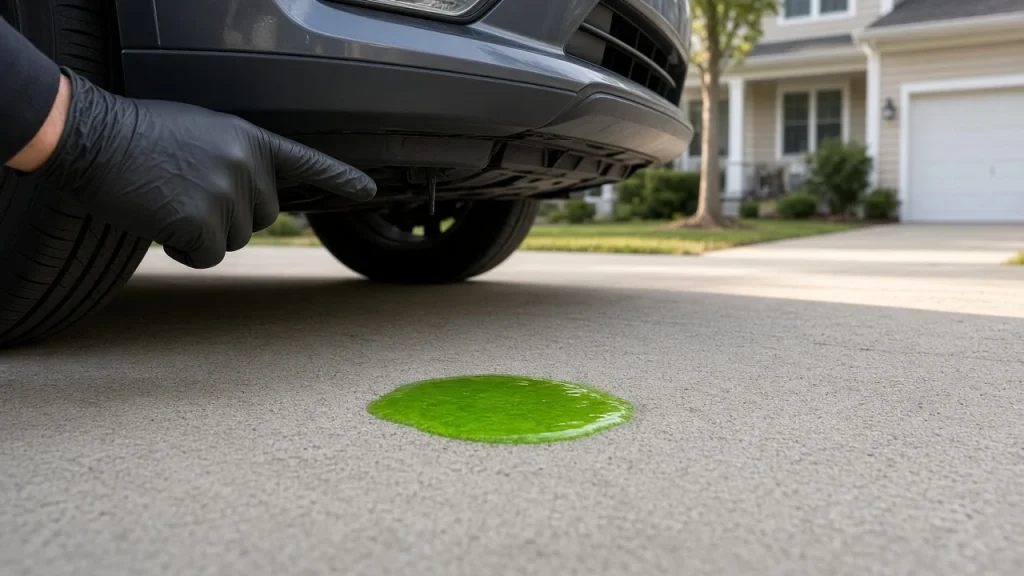
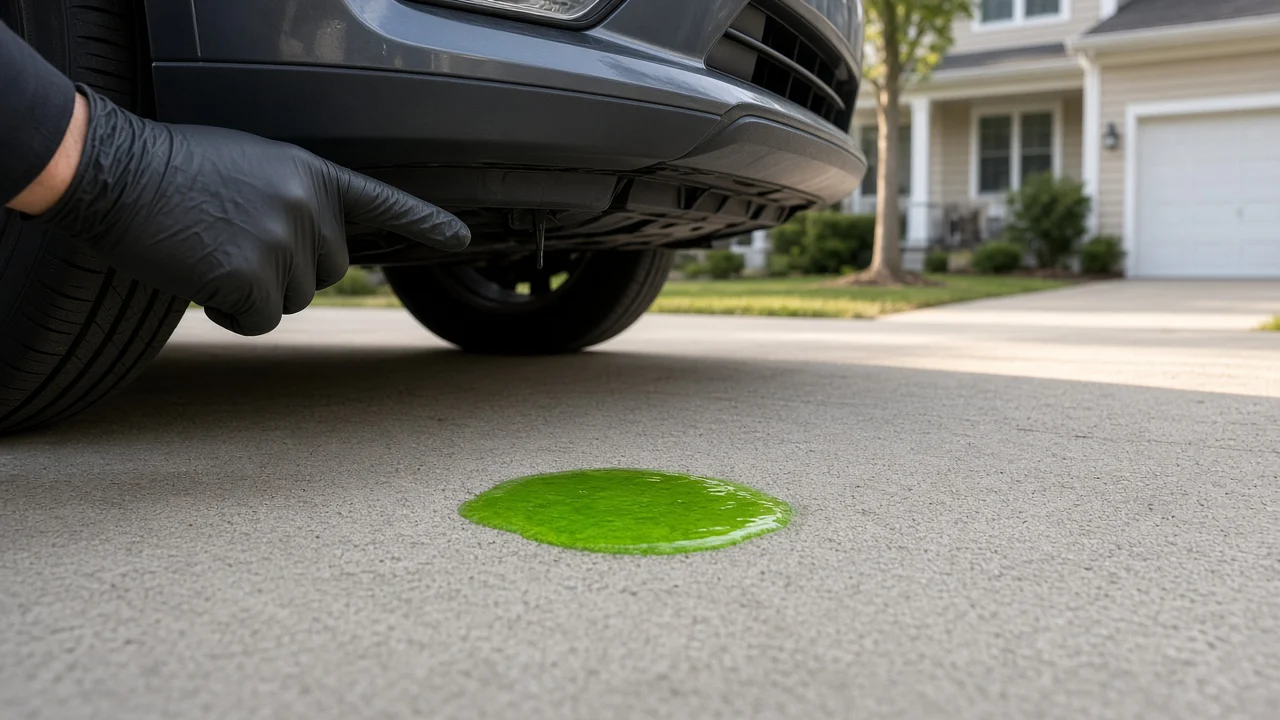
You park in the driveway after a run down St. Georges Ave and notice a puddle under the front of the car. Green, orange, pink, or yellow. Or maybe just a few sticky spots that were not there yesterday.
That puddle is an early warning. A coolant leak rarely starts as a dramatic overheating event. It usually starts as a slow drip, a reservoir that keeps dropping, or a faint sweet smell after you shut the engine off.
This guide is for Colonia, Woodbridge, Clark, Iselin, Avenel, and Rahway drivers who want a clear answer before the temperature gauge climbs. You will learn how to tell coolant from oil, transmission fluid, A/C condensation water, and washer fluid. You will see what the drip location hints at, what is safe short-term, and how a shop finds the source with a pressure test, cap test, and dye when needed.
Catching a leak early is easier than waiting for steam. For cooling system leak repair in Colonia, start with our engine cooling system service. American Auto Repair Center is at 1131 St. Georges Ave, Colonia, NJ 07067. Call (732) 702-3999 during shop hours.
More reading: If the temperature gauge is already climbing, see our car overheating guide for Colonia first.
Is it coolant? Quick fluid triage
Not every puddle under a car is coolant. Color, feel, smell, and where it lands help you narrow it, but ground stains mislead and colors vary by vehicle. The shop confirms what you found.
| What you see | Often points to | Next step |
|---|---|---|
| Green, orange, pink, or yellow fluid that feels thin but slick, with a faint sweet smell, usually under the front or middle of the engine bay | Coolant leak | Check the reservoir when cold and book a cooling system inspection |
| Clear, odorless water near the front passenger side after running the A/C | Normal A/C condensation | Usually fine. If the cabin floor is wet, see A/C repair in Colonia |
| Brown or black, oily spots | Engine oil | Oil change guide and oil change service |
| Red or pink, oily fluid | Often transmission fluid | Transmission slipping guide and transmission service |
| Blue, watery fluid with a cleaner smell | Washer fluid | Check the washer reservoir. Not a cooling system issue |
Old coolant can look brown. Some cars use blue coolant. Color alone does not tell you which coolant type is in the system or exactly where the leak is. Treat this table as a starting filter.
Is it urgent? Drip vs stop-driving clues
A few spots after parking with a steady temperature gauge is different from a growing puddle and a climbing needle. Sort the clues before you decide how far to drive.
Book soon
- A few colored spots under the front after the car sits
- Temperature gauge stays in the normal range
- Reservoir is a little low but still between the marks when cold
- No steam, no sweet smell inside the cabin, no warning light
Do not drive it far
- Temperature gauge rising or already high
- Steam from under the hood
- Low-coolant or temperature warning light
- Puddle growing fast after each stop
- Sweet smell inside the cabin, or white sweet-smelling exhaust
Never open a hot radiator cap or a hot reservoir. Hot coolant can spray and burn. Let the engine cool fully before you touch the cap.
If the gauge is climbing or you see steam, stop driving and follow our overheating guide. This post owns finding the leak. That post owns what to do when the temperature is already a problem.
The cardboard test: where the drip lands
Slide a clean piece of cardboard under the front of the car overnight, or after a short drive once the engine has cooled. The wet spot narrows the search. It does not name the exact part, because coolant can run along a hose or get blown back by the fan.
- Front-center: Often the radiator, tank seams, or the ends of the upper and lower radiator hoses.
- Behind the radiator, at the front of the engine: Common for a water pump weep hole or a thermostat housing gasket.
- Under the middle or passenger side: Heater hoses are a frequent source.
- Wet passenger carpet with a sweet smell: Points toward a heater core, not a driveway puddle.
Take a photo of the cardboard and note which side of the car the drip favors. That detail helps the tech start in the right area when the car is on the lift.
Common leak sources in plain English
Most coolant leaks come from a short list of parts. Knowing the names helps you talk with the shop without guessing which one is failing.
Radiator
The radiator often leaks first. Seams, plastic tank gaskets, and corrosion from age or road debris create slow drips that show up under the front-center of the car. Summer stop-and-go on Route 1 or Route 27 puts heat and pressure on an aging radiator every day.
Hoses and clamps
Radiator and heater hoses soften from the inside out. Soft spots, bulges, and cracks often appear at bends and under clamps. A clamp that has lost tension can weep only when the system is hot and pressurized.
Water pump weep hole
Many water pumps have a small weep hole that drips when the internal seal starts to fail. Coolant runs down the front of the engine block. A whine or slight wobble can show up with the leak, but neither sound alone proves the pump is the cause.
Thermostat housing
The gasket or housing can seep where the thermostat sits. The drip often lands near the front of the engine, close to where a water pump leak would also appear, so a visual and pressure check separate the two.
Radiator cap and overflow tank
A weak cap may not hold pressure. Coolant can leave as steam with little or no puddle on the ground. The overflow tank and its hose can also crack or loosen. Cap testing is a standard part of a cooling system inspection.
Heater core
A heater core leak often shows up as a sweet smell inside the cabin, fog on the windshield, or a wet passenger-side carpet. You may never see a driveway puddle. Weak heat in winter can also go with low coolant from a core leak.
Leaking coolant but no puddle?
The reservoir keeps dropping. You smell something sweet after parking. The driveway looks clean. That still counts as a leak.
Pinhole leaks can open only under heat and pressure, then close when the system cools. Coolant that drips onto a hot exhaust manifold or engine part can evaporate before it hits the ground. A cap that no longer holds pressure lets coolant leave as vapor into the overflow path.
Internal leaks are less common, but they are real. White sweet-smelling exhaust, milky oil on the dipstick, or bubbles in the reservoir while the engine runs are clues that need shop testing. Those signs do not automatically mean one specific gasket failure. Tests confirm the path before anyone names a repair.
If a warning light or odd temperature reading comes with the low coolant, an engine diagnostic and electrical check can cover sensors and related codes while the cooling system is pressure-tested.
Safe owner checks before you call
You can gather useful clues without tools or teardown. Do these only when the engine is cold.
- Check the coolant reservoir level against the marks on the side of the tank. Note whether it is below the low mark.
- Write down how often you have topped it off in the last few weeks.
- Photograph the puddle, the cardboard spot, and where it sits relative to the front bumper.
- Look for crusty white, green, or pink residue on hose ends, the radiator, and clamps.
- Note any sweet smell, heater performance, and how the temperature gauge behaves on a short drive.
Topping off with the coolant type listed in the owner’s manual can get you to the shop. It is a bridge, not a fix. Mixing coolant types is a bad idea. Keep pets and kids away from puddles, then hose the spot down. Coolant is toxic if swallowed.
Leave hose clamps, water pump work, and radiator replacement to the shop. Skip bottled sealants that claim to close a leak on their own. They can clog small passages and make a real repair harder later.
What happens at American Auto Repair Center
Our process follows Inspect to Quote to Repair to Confirm. The goal is to find the leak before parts are ordered.
- Visual inspection. We look at the radiator, hoses, clamps, water pump area, thermostat housing, cap, overflow tank, and heater hose connections.
- Pressure test and cap test. A cooling system pressure tester holds the system at operating pressure so we can see seepage that only appears when hot. The cap is tested separately because a weak cap can lose coolant without a clear puddle.
- Dye when the leak hides. UV dye helps find pinholes and hard-to-see seepage.
- Explain and quote. We show you what we found in plain language and give a quote before any parts go on the car.
- Repair. We fix what you approve: hose and clamp, radiator, water pump, thermostat housing, cap, or related parts.
- Correct mix and bleed. We refill with the coolant type your vehicle needs and bleed air from the system so pockets do not create hot spots.
- Confirm. Another pressure check and a short road test confirm no leak and a steady temperature.
American Auto Repair Center is at 1131 St. Georges Ave, Colonia, NJ 07067, a short drive from Clark, Iselin, Avenel, and Rahway. Hours are Monday to Friday 8:30 AM to 6:00 PM and Saturday 8:30 AM to 4:00 PM, closed Sunday. Call (732) 702-3999 to book a cooling system leak check.
Keep it from coming back
A repaired leak stays fixed longer when the rest of the cooling system is maintained on schedule.
- Follow the manufacturer’s coolant service interval in the owner’s manual. Do not invent a mileage number.
- Have hoses and the radiator cap checked at routine visits. Soft hoses and a weak cap are common repeat offenders.
- Use one coolant type that matches the vehicle. Do not mix formulas.
- On engines where the water pump is driven by the timing belt, the pump is often inspected or replaced when the belt is due. See our timing belt interval guide for that planning question.
For a full calendar of inspections and fluid services, use our preventive maintenance schedule and preventive maintenance service. NJ cold starts in winter and summer heat on local roads both stress aging hoses and caps, so routine checks matter more than waiting for the next puddle.
Related problems and next steps
Coolant leaks sit next to a few other issues drivers mix up. If one of these sounds closer to what you are dealing with, follow that path.
- Temperature climbing, steam, or a hot warning: car overheating in Colonia
- Heater blowing cold or A/C issues: A/C blowing warm air and A/C repair
- Brown or black oily spots: oil change guide
- Red fluid or slipping gears: transmission slipping guide
- Check engine or temperature warning light: check engine light guide
- Staying ahead of fluid and hose wear: preventive maintenance schedule
- Every service in one place: Colonia auto repair services guide
Get the leak checked
A coolant leak usually grows. Topping off buys time, not a repair. When the reservoir keeps dropping or the puddle returns after every drive, it is time for a pressure test.
Book engine cooling system service at American Auto Repair Center. If a warning light or odd gauge reading comes with the leak, ask for an engine diagnostic at the same visit. Call (732) 702-3999, or stop by 1131 St. Georges Ave, Colonia during shop hours.
Frequently asked questions
How do I know if my car is leaking coolant in Colonia?
Look for a green, orange, pink, or yellow puddle under the front of the car, a faint sweet smell, a reservoir that keeps dropping, or a low-coolant light. Colors vary by vehicle, so a cooling system pressure test confirms it.
What color is a coolant leak?
Usually green, orange, pink, or yellow, and sometimes blue. Old coolant can look brown. Color does not tell you where the leak is or exactly which coolant is in the system.
Is clear water dripping under my car a coolant leak?
Usually not. Clear, odorless water near the front passenger side after running the A/C is normal condensation. If it smells sweet, feels slick, or the passenger floor is wet, have it checked.
Can I drive with a coolant leak?
A small drip with a steady temperature gauge is often fine for a short trip to the shop after you check the level when cold. If the gauge climbs, you see steam, or a warning light comes on, stop driving and see our overheating guide.
Why is my coolant low but there’s no puddle?
The leak may only open under heat and pressure, the cap may not hold pressure, coolant may drip onto hot parts and evaporate, or it may be leaking internally. A pressure test and cap test help find it.
What are the most common causes of a coolant leak?
Worn hoses or loose clamps, a radiator seam or tank leak, a water pump leaking from its weep hole, a thermostat housing gasket, a faulty radiator cap, or a heater core.
Can I just keep adding coolant?
Topping off with the right coolant type can get you to the shop, but it does not fix the leak. Leaks usually grow, and running low risks overheating.
How does American Auto Repair Center find a coolant leak?
We inspect the system, pressure-test it and the cap, use dye when a leak hides, explain what we find and quote before repairs, then refill with the correct coolant and confirm there is no leak. We work during our published Colonia shop hours.