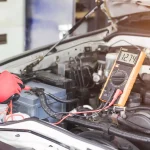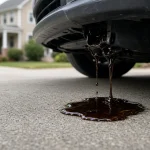


It is 7 AM on St. Georges Ave. The fan is roaring, the dial is turned all the way to hot, and the air on your hands still feels like the parking lot. Then the inside of the windshield starts to fog.
A heater that will not blow hot air is more than a comfort problem. Sometimes it is the first sign of trouble in the cooling system.
This guide shows what the pattern of cold air tells you, which checks are safe from the driver’s seat, when no heat is really an engine warning, and how our heating and A/C repair in Colonia finds the cause.
More reading: Getting the whole car ready for the cold? Start with our winter car prep checklist for Colonia.
How your car heater makes heat
Your heater does not burn anything to warm the cabin. It borrows heat the engine already made. That one fact explains almost every no-heat problem.
- Coolant picks up engine heat. As the engine runs, coolant circulates through it and gets hot.
- The thermostat decides where coolant goes. It keeps coolant in the engine until it warms up, then opens a path to the radiator.
- The heater core is a small radiator behind the dash. Hot coolant flows through it on the way back to the engine.
- The blower pushes cabin air across the core. That is the air you feel at the vents.
- The blend door mixes the air. It sends air through the heater core, around it, or a bit of both to match your dial.
So when the air stays cold, the cause almost always sits in one of five places: coolant, thermostat, heater core, blend door or blower. The first three belong to the engine cooling system, which is why a heater problem is worth taking seriously.
What the pattern of cold air tells you
How the heat fails is a strong clue. Match what you notice to the closest row, then use the next step column to decide how soon to act.
| What you notice | Most likely area | Next step |
|---|---|---|
| Air stays cold and the temperature gauge barely moves off C | Thermostat stuck open | Book a cooling system check |
| Warm at first, then lukewarm once you are on the Parkway | Thermostat stuck open | Book soon, before deep winter |
| Hot while driving, cold at red lights | Low coolant or air trapped in the system | Look at the reservoir with the engine cold, then book a check |
| No heat and the gauge is climbing | Low coolant, poor circulation or the water pump | Pull over safely, shut it off and call us |
| Cold air plus a foggy windshield or a sweet smell inside | Heater core | Book soon |
| Hot on one side, cold on the other | Blend door or its actuator | Book a check |
| Little or no air from any vent | Blower motor, resistor or cabin air filter | Book a check |
| Fan only works on the highest setting | Blower resistor | Book a check |
One normal case first: every car blows cold for the first few minutes on a frosty morning. The engine has to warm the coolant before the heater has anything to give. If heat never arrives after a real drive, keep reading.
Low coolant: the first thing to rule out
When coolant runs low, the heater core is often the first part to go without. It sits high and far from the engine, so it loses flow before anything else does. That is why cold air can show up days before a temperature warning.
- Only look at the coolant reservoir when the engine is completely cool. Never open a hot radiator cap or a hot reservoir.
- Read the level against the marks on the plastic tank. Below the low mark means coolant went somewhere.
- Coolant does not get used up like fuel. If it keeps dropping, there is a leak, and our coolant leak guide explains how to spot one.
- Air can stay trapped after a top-off or a repair. An air pocket near the heater core blocks hot coolant even when the tank looks full.
What about plain water? It is a get-to-the-shop measure only. Water does not protect against freezing or rust the way coolant does, and on a January night in Colonia it can freeze inside the engine. A coolant test checks the freeze point, which is part of every preventive maintenance visit we do.
Thermostat stuck open: slow, lukewarm heat
A thermostat that sticks open sends coolant to the radiator before the engine has warmed up. The engine runs cooler than it should. Your heater gets coolant that is only warm, never hot.
- The temperature gauge takes much longer than usual to climb, or stays low.
- Heat feels fine in town but cools off at highway speed, when cold air rushes through the radiator.
- The defroster takes ages to clear the glass.
- Fuel economy may slip a little, since a cold engine runs less efficiently.
We check the thermostat by watching the upper radiator hose as the engine warms up. If it needs replacing, we fit one that matches your vehicle’s original temperature rating.
A thermostat stuck closed is the opposite problem. Coolant cannot reach the radiator, so the engine runs hot. If that sounds closer to your car, see our car overheating guide.
Heater core trouble: cold air, fog and a sweet smell
The heater core can fail two ways. It can clog, so coolant barely flows through it. Or it can leak, so coolant escapes into the climate box behind the dash. Each one leaves its own clues.
- Cold or weak heat even though the engine is fully warm
- A greasy fog on the inside of the windshield that keeps coming back
- A sweet, syrupy smell inside the cabin
- Damp carpet on the passenger side floor
- Coolant that keeps dropping with no puddle under the car
Clogs often start when old coolant loses its corrosion inhibitors, which are there to protect the heater core and radiator.
Skip the garden hose flush and the stop-leak bottle. Both can make a small problem bigger. If the sweet smell is your main clue, our guide to burning and sweet smells helps you sort it out.
Blend door and controls: hot on one side, cold on the other
Sometimes the engine is hot, the coolant is full, and the core is fine. The heat just never gets aimed at you. That points to the blend door, a small flap inside the dash that decides how much air passes over the heater core.
- The air is stuck on cold no matter where you set the dial.
- The driver side blows hot while the passenger side blows cold, or the reverse. Many dual zone cars use a separate door and motor for each side.
- You hear clicking or tapping behind the dash when you change the temperature. That is often a stripped actuator gear.
- The temperature changes on its own after you start the car.
Most newer cars move these doors with small electric actuators run by the climate control module. Guessing gets expensive here, because the door, the motor, the panel and the wiring can all cause the same symptom. Our engine diagnostic and electrical team tests the circuit before any part is ordered.
Weak airflow: blower motor, resistor and cabin air filter
Hot air you cannot feel is still a heater problem. If the fan is weak, the warmth stays trapped in the dash.
- No air at all: the blower motor may be faulty, or its fuse or wiring has failed.
- Air only on the top speed: the classic sign of a failed blower resistor.
- A whine, rattle or ticking near the passenger footwell: a worn motor or leaves caught in the fan.
- Weak flow that never builds: a dirty cabin air filter blocking the path.
Dirty filters block airflow and trap bad smells, so a fresh filter is often the simplest fix on this list. When the motor or resistor is the cause, our blower motor repair replaces the broken fan or resistor. The same parts move cold air in July, which our A/C blowing warm air guide covers.
Safe checks you can do from the driver’s seat
You do not need tools or a flashlight under the hood to narrow this down. Do these in order and jot down what you find.
- Set the dial to full hot, the fan to medium and recirculate off. Drive for a while so the engine fully warms up.
- Watch the temperature gauge. Note whether it stays low, sits in the middle or keeps climbing.
- Feel each vent, including the floor and defrost vents, for differences between the left and right side.
- Slowly move the dial from cold to hot and listen for clicking behind the dash.
- Try each fan speed. Note any speed that does nothing.
- Later, with the engine off and fully cool, look at the coolant reservoir level.
- Check for fog on the inside of the glass, a sweet smell or a damp passenger floor.
- Write down when the cold air happens: at idle, at speed, or only after a top-off.
Keep your hands away from the engine while it runs. Belts, fans and heater hoses get hot and move fast. Hose checks belong in the shop, where we compare temperatures safely with the right tools.
When no heat is a warning about the engine
Most cold-heater problems are inconvenient, not dangerous. A few are your engine asking for help.
- No heat while the temperature gauge climbs toward hot
- Steam from under the hood
- A coolant or temperature warning light on the dash
- A sweet smell outside the car after a drive
Any of these means the engine may be low on coolant or losing circulation. Pull over somewhere safe, shut the engine off and let it cool. Never open a hot radiator cap. Call us before driving again, because pushing a hot engine can turn a hose or thermostat job into major engine damage.
Visibility matters too. A car that cannot defrost should not head onto Route 27 or Route 1 with half the glass clear. Scrape every window first. And never let the car warm up in a closed garage, even for a few minutes.
Is it worth fixing the heat right away?
A lot of drivers in Clark and Iselin tell us the same thing. It still runs, so they will deal with it in spring. We get it. Nobody wants a surprise repair before the holidays.
Here is the catch. The causes behind cold air rarely stay still. Low coolant tends to get lower. A leaking heater core keeps fogging the glass. And a stuck-open thermostat makes a cold engine work harder every morning.
Fixing it early usually means a smaller job and a safer drive, with a clear windshield all winter.
Worried about being upsold? You should not have to be. Every repair starts with a written estimate, and you decide what gets done.
How we fix a car heater at American Auto Repair Center
For 25 years, drivers from Colonia, Rahway, Avenel and Clark have brought their cars to 1131 St. Georges Ave. Heater work follows the same four steps as every job in our shop.
- Inspect. We check coolant level and condition, pressure test the system for leaks, watch the thermostat as the engine warms, compare heater hose temperatures at the firewall, test the blend door and blower, and measure the coolant freeze point.
- Quote. We explain what we found in plain words and give you a written estimate before any work starts.
- Repair. We fix only what the inspection shows. That might be coolant, a thermostat, a heater core, a blend door actuator, a blower motor or resistor, or a cabin filter.
- Confirm. We road check the car with heat and defrost running so you leave with warm air and clear glass.
Bring your notes from the driver’s seat checks. Knowing whether the heat fades at idle or at speed often points us to the right spot faster.
Related reading and how to reach us
- Winter car prep checklist for Colonia
- Car overheating: causes and safe steps
- Coolant leak: how to spot it
- Burning or sweet smell from your car
- Car A/C blowing warm air
- Preventive maintenance schedule for Colonia drivers
- Colonia auto repair services guide
Cold air at the vents does not have to mean a cold winter. Call (732) 702-3999 or stop by American Auto Repair Center at 1131 St. Georges Ave., Colonia, NJ 07067. We are open Monday to Friday 8:30 AM to 6:00 PM and Saturday 8:30 AM to 4:00 PM, closed Sunday.
Car heater FAQs
Why is my car heater blowing cold air?
A heater that blows cold is often a sign of low coolant, a stuck thermostat, or a clogged heater core. A stuck blend door or a blower problem can also cause it. Since most of these are part of the cooling system, have it checked before it turns into an overheating problem.
Why does my heater only work when I am driving?
Heat that comes back at speed but fades at idle often points to low coolant or air trapped in the cooling system, so coolant is not reaching the heater core at low engine speed. Check the reservoir with the engine cool and book a cooling system check.
Can a bad thermostat cause no heat?
Yes. A thermostat stuck open lets coolant flow to the radiator before the engine warms up, so the gauge stays low and the heat stays lukewarm. We check the thermostat as the engine warms and replace it with one that matches your vehicle’s original temperature rating.
What are the signs of a bad heater core?
Common signs are cold or weak heat, fog on the inside of the windshield that keeps returning, a sweet coolant smell in the cabin, a damp passenger floor, and coolant that keeps dropping. Have it checked soon, because low coolant can lead to overheating.
Why is my heater hot on one side and cold on the other?
That usually points to a blend door or its actuator behind the dashboard. Many cars have separate doors for each side. A clicking sound behind the dash when you change the temperature is another common clue.
Is it safe to drive with no heat?
If the temperature gauge stays normal, it is mainly a comfort issue, but a car that cannot clear its windshield is not safe in winter. If you have no heat and the gauge is climbing, pull over safely, shut the engine off, and call us before driving again.
Can I just add water if my coolant is low?
Only in an emergency, and just to get the car to the shop. Water does not protect against freezing or rust the way coolant does, and it boils at a lower temperature. In winter it can freeze inside the engine. We will flush it out and refill with the right coolant.
How does American Auto Repair Center fix a heater that is not working?
We check the coolant level and condition, pressure test for leaks, check the thermostat as the engine warms, and test the blend door and blower. Then we explain what we found and give a written estimate before any work starts.