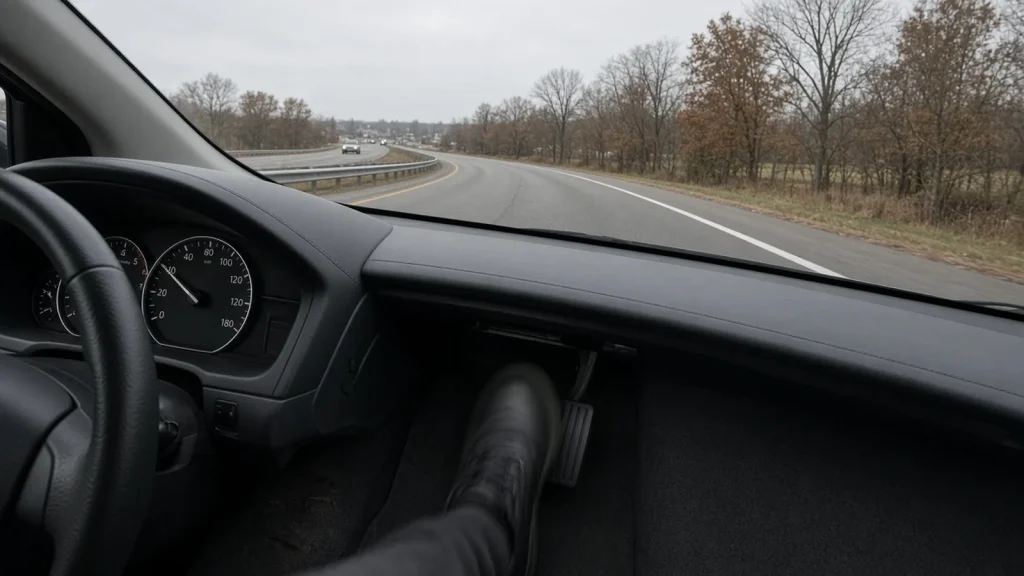
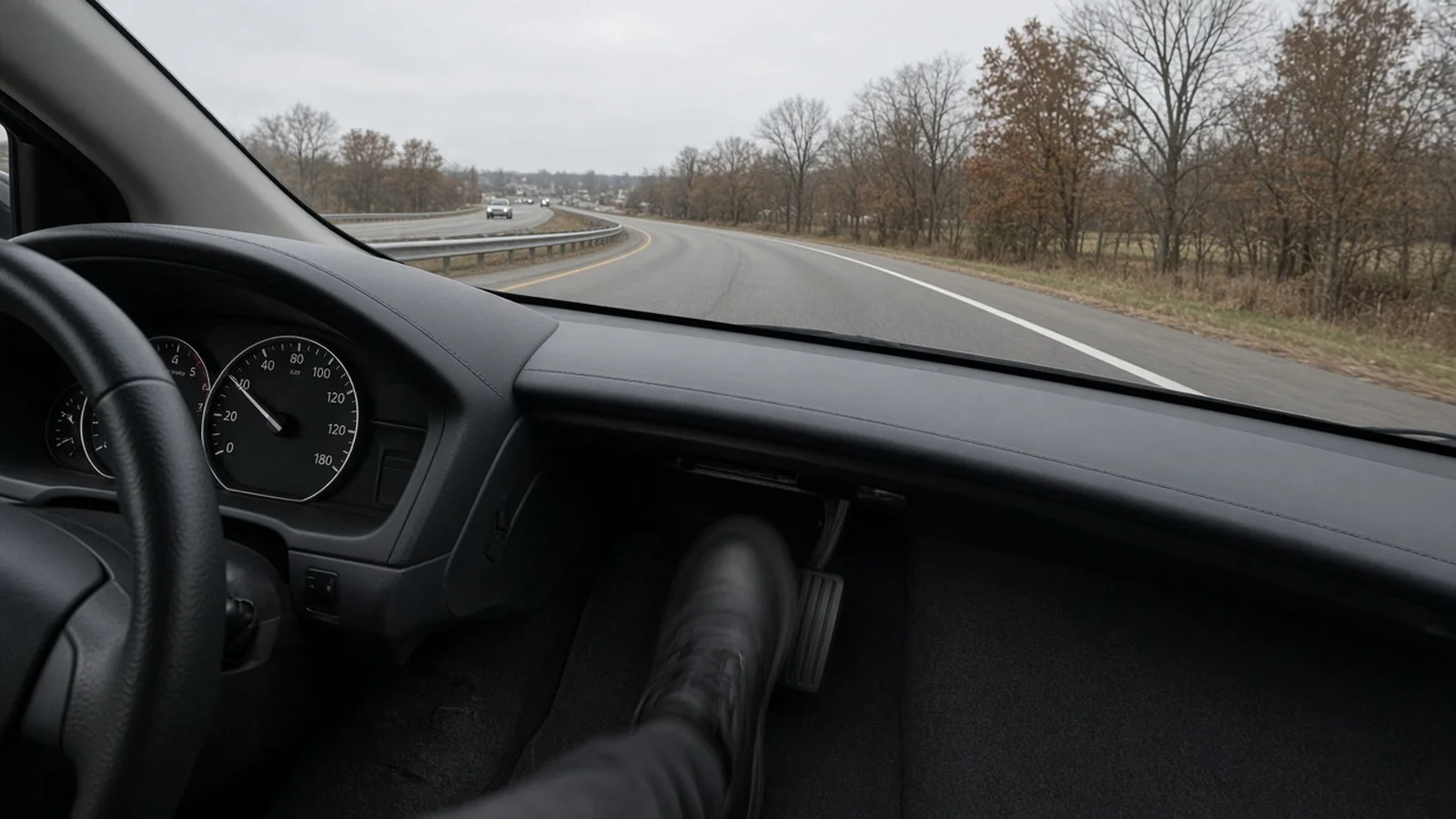
You press the gas to merge onto the Parkway and nothing happens for a second. Then the car stumbles, catches and finally pulls. If your car hesitates when accelerating, Colonia, NJ traffic makes it hard to ignore. Route 27 and St. Georges Ave do not give you much room to wait.
This guide explains what hesitation is, what the timing tells you, when it is safe to drive in and when to stop. For testing that finds the real cause, book engine diagnostic and electrical services in Colonia. Call (732) 702-3999 if you are not sure whether to drive the car in.
More reading: Does the engine die at a stop instead? Our car stalling at a stop guide covers that problem.
What hesitation feels like (and what it is not)
Hesitation is a delay or stumble between your foot and the car’s response. Drivers describe it in different ways. A lag. A flat spot. A bog, a jerk or a short surge before the power comes in.
It shows up when the engine is asked to work harder. That means pulling away from a light, passing, merging or climbing a hill. Light cruising may feel normal.
Two problems often get mixed up with it:
- Shaking while stopped. A rough, shuddering engine at a red light is a rough idle. Our car shaking at idle guide covers that one.
- Dying at a stop. An engine that quits when you brake or sit in traffic is stalling, which is a different diagnosis.
The causes can overlap. The moment it happens still points the shop in the right direction, so name it as clearly as you can.
When it happens points to the cause
Pay attention to the conditions. A stumble on a cold morning means something different from a lag that only shows up after a fill-up.
| When it hesitates | What it often points to | What to do |
|---|---|---|
| Cold start, first few minutes | Weak spark plugs or coils, a sensor reading wrong when cold, a vacuum leak that seals once warm | Note the outside temperature and how long it lasts. Book a diagnostic |
| Pulling away from a stop | Throttle position sensor, dirty throttle body, airflow sensor, vacuum leak | Drive gently and leave space. Book a scan with live data |
| Merging or passing at highway speed | Fuel delivery (pump, filter, injectors), ignition misfire under load | Avoid hard merges. Get it checked soon |
| Uphill or with a full car | Weak fuel pressure, misfire under load, a restricted exhaust | Do not push it on hills. Book a diagnostic |
| Right after a fill-up | Fuel quality, an evaporative system fault | Note the station and date. Tell the shop |
| With the check engine light on | A stored code that points to a system | Get the code read and tested soon |
| With the check engine light flashing | An active misfire that can harm the catalytic converter | Stop driving when safe. Call the shop |
The table gives you a starting point. It does not replace testing, because several of these causes feel almost the same from the driver’s seat.
Engine or transmission?
Watch the tachometer the next time it happens. It is the fastest clue you have.
If the RPM jumps but the car does not speed up to match, the transmission may be slipping. That problem lives in our transmission slipping guide and our transmission services in Colonia.
If the engine bogs down and the RPM stays low or climbs slowly, the cause is usually on the engine side. Air, fuel, spark or a sensor is the likely place to look.
A delay only during a gear change is another clue. Tell the shop whether it happens between gears or the moment you press the pedal. That one detail can save a lot of guessing.
Common causes in plain words
An engine needs the right mix of air and fuel, lit by a strong spark at the right time. Hesitation means one of those pieces is falling short when you ask for more power.
Spark plugs and ignition coils
Worn plugs and a weak coil are among the most common causes. The spark gets weaker under load, so the cylinder misfires right when you press the gas. It feels like a stumble or a jerk.
Plugs are replaced on a schedule set by your owner’s manual. Keeping up with preventive maintenance keeps an old plug from turning into a misfire.
Fuel delivery: filter, pump and injectors
The engine needs steady fuel pressure, especially at highway speed. A clogged filter, a tired pump or a dirty injector starves it. The engine runs lean and loses power when you need it most.
This kind of hesitation often gets worse on hills or with a full car. Pressure testing confirms it.
Air and sensors: air filter, MAF and throttle position
A badly clogged air filter can restrict airflow. More often, a sensor is the problem. The mass airflow sensor measures incoming air. The throttle position sensor tells the computer how far you pressed the pedal.
When either one reads wrong, the computer sends the wrong amount of fuel. The result is a lag, a bog or a surge.
Vacuum leaks
A cracked hose or a leaking intake gasket lets in air the computer never measured. The mixture goes lean. Cold mornings can make the leak worse until the rubber warms up and seals.
Exhaust restriction
A clogged catalytic converter traps exhaust in the engine. It struggles to breathe out, so it struggles to pull. This often feels worse uphill and gets worse over weeks, not days.
Throttle body, wiring and other systems
Many newer cars use an electronic throttle. Carbon buildup or a control fault can make the response feel delayed. A loose connector or damaged wire can cause hesitation that comes and goes.
Other systems can play a part too. Variable valve timing, exhaust gas recirculation and turbo boost leaks all show up on some engines. Some cars drop into a reduced-power mode to protect themselves. That mode feels like heavy hesitation and usually brings a warning light.
Is it safe to keep driving?
Mild, occasional hesitation is usually safe for a short drive to the shop. Keep it gentle. Leave extra room, skip hard merges and avoid the busiest stretch of Route 1 if you can.
The real risk is timing. A car that stumbles while you merge onto the Parkway can leave you short of speed with traffic closing fast. Hesitation that is getting worse, happening more often or showing up with a warning light should not wait.
Ignoring a misfire also costs more over time. Unburned fuel can overheat and damage the catalytic converter, which turns a small repair into a bigger one.
When to stop driving
Pull over when it is safe and call before going further if you notice any of these:
- The check engine light is flashing.
- You smell raw fuel inside or around the car.
- You see smoke from under the hood or a lot of it from the exhaust.
- The car loses power on the highway or will not keep up with traffic.
- The temperature gauge climbs toward hot.
- A new knocking or banging comes from the engine.
A flashing light is the one drivers most often push through. Our engine light diagnostics in Colonia page explains why it matters. If the car is not safe to drive, arrange your own tow rather than driving it in.
What to note before you call
Hesitation can come and go. A few notes help us find it faster, even if it refuses to act up on the day you drop the car off.
- When it started, and whether it is getting worse.
- Cold engine, warm engine or both.
- The speed and situation: from a stop, merging, uphill or passing.
- Whether the RPM rises or stays low when it stumbles.
- Any warning lights, and whether one flashed.
- A recent fill-up at a new station.
- Recent service, such as plugs, a battery or work under the hood.
A quick phone note right after it happens beats trying to remember it a week later.
Why a quick code read may not be enough
A free code read at a parts store gives you a code, not an answer. A misfire code tells you a cylinder missed. It does not say whether the plug, the coil, the injector or a vacuum leak caused it.
Some faults cause hesitation before any code sets. Others store a pending code that a basic reader may skip. Swapping parts based on a guess gets expensive fast.
A full engine diagnostic reads codes, then watches live data while the engine runs. A road test under the same conditions confirms what the numbers suggest.
Cold weather and hesitation in Colonia
New Jersey winters tend to expose weak parts. A coil that barely gets by in September may start missing in January. Cold, stiff rubber can open a small vacuum leak. A sensor that reads slightly off can push the mix too far on a frosty morning.
If the hesitation only shows up in the first few minutes on cold days, say so when you call. That detail narrows the list. Our winter car prep guide covers other checks worth doing before the deep cold sets in.
How we diagnose hesitation at American Auto Repair Center
We follow the same four steps on every car, whether you drive in from Colonia, Iselin, Avenel, Clark or Rahway.
- Inspect. We scan for stored and pending codes, watch live data, and check the ignition, air and fuel systems. When it is safe, we road test the car under the conditions you described.
- Quote. We explain what we found in plain words and give you a written estimate before any work starts.
- Repair. We fix the confirmed cause, not a list of maybes.
- Confirm. We road test again to make sure the hesitation is gone.
Our team has looked after cars in Colonia for 25 years. Ask us if mobile repair fits your situation, as long as the car is safe to drive.
Related reading and how to reach us
- Car stalling at a stop in Colonia
- Car shaking at idle
- Transmission slipping signs
- Check engine light in Colonia
- Preventive maintenance schedule
- Guide to auto repair for car owners
A stumble is easier to track down while it is still mild. Call (732) 702-3999 or visit American Auto Repair Center at 1131 St. Georges Ave., Colonia, NJ 07067. We are open Monday to Friday 8:30 AM to 6:00 PM and Saturday 8:30 AM to 4:00 PM, closed Sunday.
Hesitation FAQs
Why does my car hesitate when I accelerate?
Common causes are worn spark plugs or ignition coils, a fuel delivery problem such as a clogged filter or weak pump, a dirty or failing airflow sensor, a vacuum leak, or a restricted exhaust. Testing finds which one it is.
Is it safe to drive a car that hesitates?
Mild, occasional hesitation is usually safe for a short drive to the shop. Stop driving if the check engine light flashes, you smell fuel, or the car loses power on the highway.
Can bad spark plugs cause hesitation?
Yes. Worn plugs or a weak coil can misfire under load, which feels like a stumble when you press the gas.
Why does my car hesitate only when the engine is cold?
Cold starts can expose weak ignition parts, sensor faults or vacuum leaks that the engine hides once warm. Note the temperature when you call.
Is it my transmission or my engine?
If the RPM climbs but the car does not speed up, the transmission may be slipping. If the engine bogs and the RPM stays low, the cause is usually on the engine side.
Will the check engine light always come on?
No. Some problems cause hesitation before a code sets, which is why live data and a road test matter.
Can a fuel additive fix hesitation?
We do not rely on one. It will not fix a worn coil, a failing pump or a vacuum leak.
How does American Auto Repair Center diagnose hesitation?
We scan for codes, watch live data, inspect ignition, air and fuel parts, and road test when safe. Then we explain what we found with a written estimate before any work starts.